Setting up a cold plunge filtration system means choosing the right filter, sizing a pump for proper turnover, and arranging plumbing so water flows efficiently while you can access equipment for maintenance. You’ll pick media or cartridges based on clarity needs and upkeep, then plan sanitizer dosing and temperature control that won’t interfere with filtration. Get these fundamentals right and you’ll avoid most problems—next, you’ll want to map exact flow rates and layout options.
Key Takeaways
- Choose a filter type (cartridge, sand, or DE) based on desired clarity, maintenance level, and compatibility with sanitizers.
- Calculate pump flow by dividing plunge volume by desired turnover (1–2 hours), convert GPH to GPM, and add 10–20% margin.
- Select filter media/cartridge micron rating (5–20 μm typical) and enough surface area to match pump flow without excessive pressure loss.
- Design plumbing with short suction lines, minimal bends, pump on stable base near tank, and returns positioned for gentle, even circulation.
- Implement a sanitization schedule: maintain pH/alkalinity, choose a sanitizer, perform weekly shocks as needed, and log tests and doses.
Choosing the Right Filter Type for Your Plunge
When selecting a filter for your cold plunge, think first about how you’ll use the tub and how much maintenance you’re willing to do, because the right filter balances water clarity, sanitation, and convenience. You’ll choose between cartridge, sand, and diatomaceous earth (DE) systems: cartridges are compact and easy to swap, sand filters handle larger volumes with low upkeep, and DE offers the finest filtration but requires backwashing and careful handling. Consider media lifespan, replacement cost, and how each handles oils, sweat, and organic debris common in cold plunges. Also factor in the filter’s compatibility with sanitizers like chlorine or bromine and whether you’ll pair it with UV or ozone for added microbial control. Pick a type that matches your routine and water quality goals.
Calculating Pump Size and Flow Rate
Now you’ll figure out the gallons-per-minute (GPM) your cold plunge needs by considering pool volume and desired turnover rate, which tells you how quickly the entire volume gets filtered. You’ll also match that flow requirement to a pump’s performance curve, guaranteeing the pump can overcome the system’s total head — the resistance from piping, fittings, and the filter. Getting both GPM and pump head right guarantees efficient filtration and reliable circulation without overworking the equipment.
Calculating Required GPM
A simple calculation will tell you how much flow your cold plunge needs, and getting that number right guarantees effective filtration and water clarity without oversizing your pump. First, determine the plunge volume in gallons by measuring length, width, and average depth, then multiply those dimensions. Next, decide how often you want the entire volume turned over; for cold plunges, a 1–2 hour turnover is common, so choose 1.5 hours if unsure. Divide total gallons by turnover hours to get gallons per hour, then divide by 60 to convert to gallons per minute (GPM). Add a margin of 10–20% to account for minor losses or future load increases. Record this GPM when selecting your pump capacity.
Matching Pump Head
1 clear step you’ll take next is to match the pump’s head—or the resistance the pump must overcome—to the flow rate you calculated, because selecting a pump by GPM alone can leave you with insufficient circulation; you’ll need to add up the total dynamic head from pipe length, fittings, elevation changes, and filter/backwash resistance, then use the pump’s performance curve to find the actual flow at that head. Calculate head losses for each pipe run, count elbows and valves, and convert elevations to feet of head. Add filter pressure drop under normal and backwash conditions. With total dynamic head established, consult pump curves to pick a model that delivers your target GPM at that head, allowing margin for aging and debris. Test and adjust piping as needed.
Selecting Filter Media and Cartridge Options
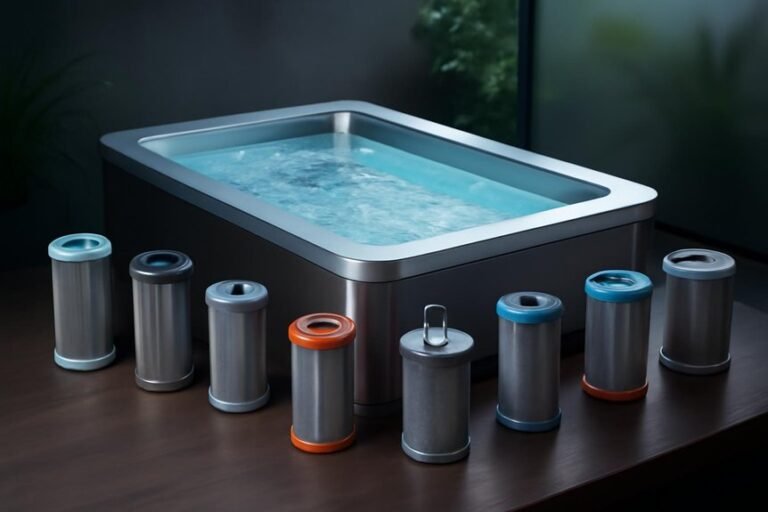
Because filter choice determines how effectively your cold plunge stays clean and how much maintenance you’ll face, you should weigh media type, micron ratings, and flow compatibility before buying anything. Pick between cartridge, sand, and diatomaceous earth (DE) systems: cartridges are compact and easy to replace, sand is low-maintenance for larger volumes, and DE captures very fine particles but requires careful handling. For cartridges, check micron ratings—5–20 μm suits typical debris, while under 5 μm improves clarity but stresses flow and requires frequent changes. Match cartridge surface area to your pump’s flow to avoid pressure loss and premature clogging. Look for pleated polyester for longevity, washable options for economy, and FDA-rated materials if you use chemical sanitizers. Keep spare cartridges and a cleaning schedule to maintain performance.
Designing Plumbing and Return Layouts
When you plan plumbing for your cold plunge, think about where the pump will sit and how the pipes will route to minimize bends and maintain steady flow. Place the pump close to the tank on a solid, level surface with easy access for maintenance, and run suction lines as short and straight as possible to reduce strain and noise. Position return nozzles to create gentle circulation across the water surface and along the depth, aiming for even turnover without strong jets that could chill or disturb the bather.
Pump Placement and Routing
Good pump placement and thoughtful routing make the difference between an efficient, low-maintenance cold plunge system and one that wastes energy or becomes a constant headache; start by locating the pump as close to the water source as practical to minimize suction lift and reduce the risk of cavitation. Position the pump on a stable, level surface, slightly below the waterline when possible, and secure it to reduce vibration and noise. Use short, straight suction runs with gradually sweeping bends, avoid unnecessary fittings, and size pipe diameters to maintain flow while minimizing friction losses. Include a clean, accessible strainer or pre-filter before the pump, install isolation valves for service, and plan for winterization access. Thoughtful routing preserves performance and simplifies maintenance.
Return Nozzle Positioning
While a solid return layout starts with understanding flow rates and turnover needs, nozzle placement ultimately determines circulation patterns, thermal stratification, and how effectively debris and treated water are moved through the plunge. You’ll aim return nozzles to create a gentle, circulating flow that sweeps debris toward the main drain or skimmer without generating strong currents that disturb users. Position nozzles low and angled along the long axis to promote complete turnover and reduce cold or warm pockets; use multiple smaller outlets rather than one powerful jet to avoid dead zones. Offset returns from inlets and filters to encourage cross-flow, and consider adjustable fittings so you can fine-tune direction during commissioning. Document the final layout for maintenance and future changes.
Sanitization Methods and Chemical Management
Keeping your cold plunge water safe and clear starts with a consistent sanitization plan that balances chemical treatment, filtration, and routine testing. You should choose a primary sanitizer—chlorine, bromine, or a mineral/UV combination—based on compatibility with materials and personal sensitivity, then maintain manufacturer-recommended concentrations using calibrated test kits. Shock treatments remove organic load after heavy use or contamination, and you’ll schedule them weekly or as indicated by tests. Maintain proper pH and alkalinity to maximize sanitizer efficacy and protect equipment; adjust slowly with measured doses. Store chemicals securely, labeled, and separate to prevent reactions, and follow disposal rules. Keep a log of tests, doses, and shock events so you can spot trends and respond proactively to cloudiness or microbial clues.
Integrating Temperature Control and Automation
A well-designed temperature control and automation strategy lets you keep your cold plunge consistently within its ideal range, reduces manual adjustments, and protects components from thermal stress. You’ll want a reliable thermostat or digital controller wired to the chiller or heater, with a clear setpoint and hysteresis to prevent rapid cycling. Add temperature sensors in the water and near equipment to detect gradients and trigger safety shutoffs. Use a programmable controller or smart relay to schedule cooling cycles, circulation, and defrost routines, and integrate alerts for out-of-range conditions via text or app notifications. Automate basic maintenance reminders and link chemical dosing pumps if you have automated sanitization, ensuring coordinated operation that preserves water quality and extends equipment life.
FAQ
How Often Should I Replace the Filter Housing or Seals?
How often should I inspect the seals in my filter system?
It is recommended to inspect the seals monthly to ensure they are in good condition. Look for any signs of cracking, leaks, or stiffness that may indicate they need to be replaced.
When should I replace the seals?
Seals should be replaced every 1–2 years or sooner if you notice any deterioration, such as cracking or leaks. Regular replacement helps maintain the effectiveness of the filter system.
How often should I replace the filter housing?
The filter housing should be replaced every 3–5 years. However, if you notice any damage, warping, or leaking, it should be replaced immediately to ensure safety and proper functionality.
Can I Use Pool-Grade Chlorine Tablets in a Cold Plunge?
FAQs about Using Pool-Grade Chlorine Tablets in a Cold Plunge
1. Can I use pool-grade chlorine tablets in my cold plunge?
No, pool-grade chlorine tablets are too strong for cold plunges. They can potentially damage the equipment and cause skin irritation.
2. What should I use to sanitize my cold plunge?
It’s best to use diluted, purpose-formulated sanitizers specifically designed for cold plunge systems. Always follow the manufacturer’s recommendations for maintaining water safety.
3. What are the risks of using pool-grade chlorine in a cold plunge?
Using pool-grade chlorine can lead to equipment damage and skin irritation, which may compromise your cold plunge experience and safety.
What Electrical Protections Are Required for Outdoor Plunge Installations?
What electrical protections are necessary for outdoor plunge installations?
Outdoor plunge installations require GFCI-protected circuits to prevent electrical shocks. Additionally, using a weatherproof outdoor subpanel or breakers ensures safety against the elements.
Why is proper grounding important for outdoor plunge installations?
Proper grounding is crucial for outdoor plunge installations as it helps to prevent electrical surges and protects against potential hazards. It ensures that any fault current is safely directed away from users and equipment.
What type of wiring should be used for outdoor plunge installations?
Wet-location-rated wiring is essential for outdoor plunge installations to withstand exposure to moisture and environmental conditions. Using conduit that is also rated for wet locations further enhances safety and durability.
Are Solar-Powered Pumps Practical for Continuous Filtration?
FAQ: Can solar-powered pumps be used for continuous filtration?
Yes, solar-powered pumps can effectively support continuous filtration systems when designed properly.
FAQ: What factors should be considered for solar-powered filtration systems?
When setting up a solar-powered filtration system, it’s essential to size the solar panels and batteries correctly, use efficient DC pumps, and include charge controllers to ensure optimal performance.
FAQ: How can I ensure reliable filtration during cloudy weather?
Planning for cloudy periods is crucial. This can involve having sufficient battery storage or backup systems in place to maintain filtration regardless of sunlight availability.
How Do I Winterize a Cold Plunge in Freezing Climates?
FAQs on Winterizing a Cold Plunge in Freezing Climates
1. What steps should I take to drain my cold plunge for winter?
Begin by draining the cold plunge partially to prevent freezing. Ensure that all water is removed from the plumbing system to avoid any damage during the winter months.
2. How can I protect the plumbing and equipment from freezing?
Insulate any exposed pipes and remove or properly winterize the pump and filter. Adding non-toxic antifreeze in needed areas can help protect against freezing temperatures.
3. What should I do after winterizing my cold plunge?
After winterizing, cover the plunge tightly to keep out debris and monitor for ice buildup. Regularly check the system to ensure that freezing conditions haven’t caused any cracks or damage to the equipment.
Final Thoughts
You’ve now got the essentials to set up a reliable cold plunge filtration system: pick a filter that matches your maintenance tolerance and clarity goals, size a pump to turnover the plunge in about 1.5 hours, and choose media or cartridges that meet your desired particulate capture. Lay out plumbing for efficient flow and easy access, automate temperature and cycles where useful, and maintain a clear sanitization plan with compatible chemicals and balanced water to protect both you and the system.