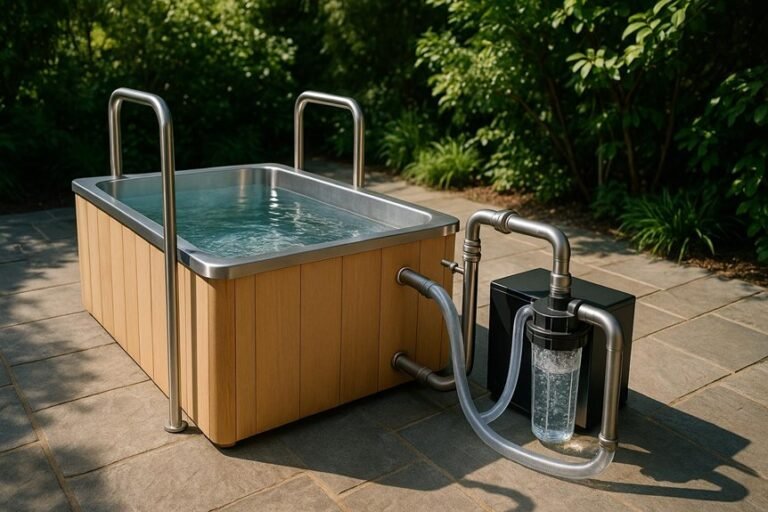
If you run a cold plunge, you’ll want a clear routine to keep the water safe, comfortable, and equipment-running smoothly; this guide walks you through pH testing and balancing, sanitizer choices, filter care, draining and deep cleaning, and how to handle algae, cloudiness, or odors. You’ll learn practical steps for daily checks and seasonal maintenance, plus troubleshooting tips and recordkeeping practices that save time and extend system life—so you can focus on the plunge itself.
Key Takeaways
- Test pH and sanitizer levels at least twice weekly, keeping pH 7.2–7.8 and chlorine 1–3 ppm (or bromine 3–5 ppm).
- Clean or backwash filters regularly and inspect the pump monthly for leaks, noise, and worn hoses.
- Drain and deep-clean the plunge on a scheduled basis, scrubbing surfaces and rinsing before refilling.
- Shock or use ozone/UV treatments for persistent cloudiness, biofilm, or algae while maintaining sanitizer residuals.
- Winterize by protecting hoses and seals, replacing brittle parts, and following manufacturer antifreeze or desiccant guidance.
Why Regular Water Care Matters
Because cold plunge water is a direct interface between your body and the environment, regular care matters for both safety and performance. You’ll reduce infection risk by removing contaminants and controlling microbial growth, which keeps skin and respiratory reactions less likely and recovery sessions consistent. Regular maintenance preserves equipment life, since mineral buildup and organic matter accelerate wear on pumps, filters, and heaters. You’ll also maintain thermal performance; clean, well-circulated water transfers cold more evenly so your sessions stay predictable and effective. Routine attention saves money over time by preventing costly repairs and major cleanings. Finally, consistent records and scheduled tasks let you spot trends early, adjust procedures, and guarantee that every plunge is both invigorating and safe for you and any other users.
Testing and Balancing Ph Levels
Maintaining proper pH is one of the most practical ways to keep your cold plunge safe and comfortable, so you’ll want to test it regularly and correct imbalances promptly. pH measures how acidic or alkaline the water is, and small shifts can affect sanitizer effectiveness, cause skin or eye irritation, and accelerate corrosion of metal parts or scaling on surfaces.
You should test pH at least twice weekly with reliable test strips or a digital meter, recording results and trends. Aim for a target pH between 7.2 and 7.8, where water feels comfortable and sanitizers work efficiently. If pH is low, add a pH increaser (sodium carbonate); if high, add a pH reducer (muriatic acid or sodium bisulfate), following product directions and retesting after circulation.
Managing Chlorine and Bromine Safely
When you’re managing a cold plunge, keeping chlorine or bromine levels within the recommended range is one of the most important steps for safety and water clarity, because these sanitizers kill bacteria, control algae, and limit organic buildup that can cloud or contaminate the tub. You should test sanitizer concentration regularly, using test strips or a liquid kit, aiming for the manufacturer’s suggested ppm—typically 1–3 ppm for chlorine or 3–5 ppm for bromine in recreational tubs. Add chemicals gradually, with the pump running, and never mix products. Store sanitizers in a cool, dry place away from organic materials. Monitor combined chlorine (chloramines) and shock the water when levels rise. Wear gloves and eye protection when handling concentrated chemicals, and follow label directions precisely.
Alternative Sanitation Options (UV, Ozone, Salt)
You can consider UV sanitation, ozone generators, or salt systems as alternatives or complements to traditional chlorine and bromine, each offering distinct ways to reduce microbial load. UV units use focused light to inactivate pathogens without adding chemicals, while ozone and salt systems create reactive disinfectants in the water that break down contaminants but require careful control and maintenance. We’ll compare how each method works, what equipment and upkeep they need, and the trade-offs in effectiveness, cost, and safety so you can choose the best fit for your cold plunge.
UV Sanitation Basics
Although often paired with filtration or chemical treatments, UV sanitation offers a powerful, chemical-free way to reduce microorganisms in your cold plunge, and it’s worth understanding how it fits into an overall maintenance plan. You’ll install a UV lamp in-line with circulation so water passes the bulb at the right flow rate; exposure time and lamp intensity determine effectiveness, so match the unit to your plunge volume. UV inactivates bacteria, viruses, and algae by damaging DNA, but it doesn’t remove particles or neutralize dissolved organics, so pre-filtration and periodic chemical checks remain important. Lamps age and fouling reduces output, so schedule lamp replacements and clean quartz sleeves per manufacturer guidance. Use sensors or dosimeters when available to verify performance.
Ozone and Salt Systems
Because ozone and salt systems work very differently from UV, it helps to look at each option on its own and as part of a combined sanitation strategy. Ozone generators inject a powerful oxidizer that destroys bacteria and breaks down organics quickly; you’ll appreciate their chemical-free residual, but they don’t leave lasting protection, so you’ll still monitor occasional sanitizer levels. Salt systems use electrolysis to produce chlorine from dissolved salt, giving steady, low-level chlorine that’s easier on skin and equipment while still controlling pathogens. You can pair ozone for shock treatment with a salt system for ongoing maintenance, reducing total chemical demand and improving clarity. Installations require proper sizing, corrosion-resistant components, and routine checks to guarantee safe, reliable performance.
Filtration System Basics and Maintenance
You’ll want to choose the right cartridge filter type for your plunge—different materials and micron ratings capture different sizes of debris and affect flow. Keep a regular pump maintenance schedule, checking bearings, seals, and flow monthly or according to the manufacturer so you avoid unexpected failures. Finally, plan routine backwash or cartridge cleaning to restore efficiency and prolong filter life, and record when you clean so you can spot trends and adjust intervals.
Cartridge Filter Types
When selecting a cartridge filter for your cold plunge, think about the balance between filtration efficiency, maintenance effort, and cost, because the right choice keeps water clear and reduces chemical use. You’ll choose between pleated, spun, and folded media cartridges: pleated filters offer high surface area and longer run times, spun (or string-wound) cartridges trap larger debris and are inexpensive, while folded or depth filters balance fine particle capture with reasonable flow. Consider micron ratings—lower numbers catch finer particles but clog faster—and material compatibility with cold water and sanitizers. Look for washable or reusable options if you want lower long-term cost, but expect periodic replacement to maintain performance. Match cartridge size and flow specifications to your system for best results.
Pump Maintenance Intervals
Now that you’ve matched the right cartridge to your cold plunge, keeping the pump running reliably will preserve that filtration performance and extend equipment life. You should follow a scheduled maintenance plan: inspect the pump monthly for leaks, unusual noise, or vibration, and check hoses and fittings for tightness and wear. Every three months, clean the pump strainer basket and verify impeller clearance to prevent reduced flow. Semiannually, test motor amperage and lubricate bearings if the model requires it; document readings to spot gradual decline. Replace seals and worn parts every 12 months, sooner if you see oil or water ingress. Consistent intervals reduce emergency repairs, maintain water clarity, and extend the system’s usable lifespan.
Backwash and Cleaning
Although backwashing often feels like a routine chore, it’s one of the most important practices you can use to keep a cold plunge’s filtration system working efficiently and to preserve water clarity. When you backwash, you reverse flow through the filter media to dislodge trapped debris, then rinse to settle media and expel waste; doing this regularly prevents clogging, maintains flow rate, and reduces stress on the pump. Inspect the filter pressure gauge: if it rises 8–10 psi above clean baseline, backwash. Use clear steps—shut pump, switch to backwash, run until discharge clears, then set rinse and return—so you avoid mistakes. Periodically remove and deep-clean cartridges or media, and replace worn components to sustain performance.
Pump Care and Winterization Tips
Because your pump is the heart of your cold plunge system, regular care and proper winterization are essential to keep it running efficiently and prevent costly damage during freezing conditions. Inspect hoses, fittings, and seals monthly for cracks or wear, and replace any brittle components before cold weather arrives. Clean the pump strainer and impeller gently to remove debris that can reduce flow and stress the motor. If you’ll store the pump, flush it with clean water, then follow manufacturer guidance for antifreeze or desiccant use in exposed cavities; never use automotive antifreeze unless specified. Elevate or shelter external pump units to limit ice buildup, and disconnect power when servicing. Schedule a professional check annually to verify bearings, electrical integrity, and performance.
Proper Draining and Thorough Cleaning
You’ll want a clear drain schedule—how often you empty the plunge depends on use, local water quality, and whether you’re treating regularly—so set a routine that prevents buildup without wasting water. When it’s time to clean, follow a step sequence: drain completely, scrub surfaces and fittings with approved brushes and mild cleaners, rinse thoroughly, then inspect seals and filters before refilling. Finally, choose sanitizing agents and methods that match your system—chlorine, bromine, or non-chlorine oxidizers—and follow label instructions and safety precautions to keep water safe and equipment protected.
Drain Schedule and Frequency
When you set a consistent drain schedule for your cold plunge, you’ll protect the water quality and extend the life of the equipment; regular, planned drainage lets you thoroughly clean surfaces, flush filters, and address buildup before it becomes a problem. Decide frequency based on usage, local water quality, and sanitizer type: light home use may need weekly or biweekly drains, while heavy commercial use often requires daily or every-few-days cycles. Inspect water clarity, odor, and test results to adjust timing; increase frequency if you see cloudiness, scum, or persistent chemical demand. Coordinate drains with routine filter maintenance and scheduled downtime to minimize disruption. Keep a log of dates, observations, and actions so you can spot trends and refine the schedule effectively.
Deep-Cleaning Step Sequence
After you’ve established a regular drain schedule and tracked water conditions, it’s time to follow a clear, step-by-step deep-cleaning sequence that guarantees a safe, sanitary cold plunge without damaging surfaces or equipment. Start by turning off power to pumps and heaters, then remove covers, baskets, and detachable fittings for separate cleaning. Drain water fully, using a pump or gravity method, and inspect the basin for residue, scale, or biological buildup. Scrub all surfaces with nonabrasive brushes and approved cleaners, paying special attention to corners, seams, and pipe inlets where grime hides. Rinse thoroughly to remove debris and cleaner residue. Reassemble components, refill slowly while checking seals and fittings for leaks, and restart equipment only after confirming operation is normal.
Sanitizing Agents and Methods
Because effective sanitizing starts with proper draining and scrubbing, you should treat chemical selection and application as the final step in a thorough cleaning sequence rather than a substitute for mechanical removal of grime. After emptying the tub, scrub surfaces with a nonabrasive brush and an enzyme cleaner to remove biofilm, paying attention to seams, drains, and fittings. Rinse completely, then choose an appropriate sanitizer—chlorine, bromine, or peroxide—based on material compatibility and exposure risks. Measure and dose precisely, using test strips or a digital tester to confirm residual levels and pH, then circulate the solution briefly before draining again if manufacturer instructions require. Ventilate the area, wear gloves and eye protection, and document concentrations and contact times for safety and regulatory compliance.
Handling Algae, Cloudiness, and Odors
Although cold plunge tubs are prized for their simplicity, keeping the water clear, odor-free, and free of algae takes consistent attention and a few key practices you’ll want to follow. Start by testing pH and sanitizer levels regularly; improper balance lets algae flourish and causes cloudiness. Brush surfaces and vacuum debris weekly to remove spores and organic material that feed growth. Run filtration longer when you notice haziness, and clean or replace filters promptly. For persistent algae, shock with an appropriate non-chlorine or chlorine treatment per manufacturer guidance, then filter continuously until clarity returns. Address odors by checking for biofilm in lines and skimmers, disinfecting those parts, and maintaining adequate sanitizer residuals. Prompt action prevents small issues from becoming major cleanings.
Seasonal Maintenance Schedule
When the seasons change, you’ll want a clear, predictable maintenance schedule so your cold plunge stays safe and inviting year‑round; set routine checks and seasonal tasks into your calendar to avoid surprises and reduce heavy cleanings. In spring, plan a deep clean after pollen and runoff, replace filters, inspect seals and test sanitizer levels weekly as temperatures rise. During summer, increase circulation hours, monitor evaporation and water chemistry more often, and trim nearby vegetation to limit debris. In fall, remove leaves, lower temperature setpoints gradually, and prepare for less frequent use by reducing chemical shocks while keeping sanitation steady. In winter, protect equipment from freezing, run anti‑freeze protocols if needed, and perform monthly thorough inspections to spot wear.
Recordkeeping and Troubleshooting Logs
Keeping just a few well‑organized logs can save you time, prevent problems, and make troubleshooting far easier when something goes wrong. You should keep daily entries for temperature, pH, and sanitizer levels, noting who checked them and any adjustments made. Add weekly notes for filter changes, shock treatments, and visible debris removal so patterns become obvious over time. When a malfunction occurs, record symptoms, the time discovered, steps you took, and parts replaced; include photos or serial numbers where relevant. Review logs monthly to spot gradual declines in performance or recurring issues tied to weather or usage. Clear, consistent records let you communicate precisely with technicians and decide when preventive action is warranted.
FAQ
Can I Use Essential Oils in My Cold Plunge?
Can I use essential oils in my cold plunge?
No, it’s not advisable to use essential oils in your cold plunge. They can damage the surfaces, clog the filters, and disrupt the sanitation process.
What happens if I add essential oils to my cold plunge?
Adding essential oils can lead to costly repairs and maintenance issues, as they can interfere with the equipment and water quality.
What should I use instead of essential oils in my cold plunge?
It’s best to stick to manufacturer-approved sanitizers for maintaining water quality. Always consult your plunge tub’s manual for proper maintenance guidelines.
How Long After Filling Can I Safely Use the Plunge?
FAQ: How soon can I use the plunge after filling it?
You can typically use the plunge within 1–2 hours after filling, provided that the water’s temperature, sanitizer level, and pH are properly balanced.
FAQ: What factors might delay the use of the plunge?
If you’ve added chemicals, done extensive cleaning, or filled the plunge with very cold or hot water, it’s advisable to wait longer for conditions to stabilize before using it.
FAQ: How do I ensure the water conditions are safe for use?
Check the water temperature, sanitizer levels, and pH to ensure they are within the recommended ranges before using the plunge. This will help maintain a safe and enjoyable experience.
Are Bathers Required to Shower Before Using the Plunge?
Are bathers required to shower before using the plunge?
No, bathers are not strictly required to shower before using the plunge.
Why is it recommended to rinse before using the plunge?
Rinsing helps remove lotions, sweat, and oils from the body, which in turn aids in maintaining water quality and reduces the demand for sanitizers.
How does rinsing benefit other users of the plunge?
Can Pets Be Allowed in the Cold Plunge?
FAQ: Can I bring my pet into the cold plunge?
No, pets should not be allowed in the cold plunge. They can contaminate the water with hair and bacteria, which can affect water quality.
FAQ: What are the risks of allowing pets in the cold plunge?
Allowing pets in the cold plunge can stress maintenance protocols and pose health risks to other users. Keeping animals out helps maintain a safe and clean environment.
FAQ: How does having pets in the cold plunge impact maintenance?
Pets can complicate maintenance due to added debris and potential water contamination. By keeping them out, maintenance becomes simpler and more efficient.
What Insurance or Liability Concerns Apply to Home Plunges?
What liability concerns should I be aware of with home plunges?
Home plunges can pose significant liability risks, including slips, drowning, and injuries. Homeowners should be aware that standard homeowner’s insurance may not cover these risks fully.
Does my homeowner’s insurance cover injuries related to my pool?
Many homeowner’s policies may not provide coverage for intentional pools or home plunges. It is advisable to seek additional liability or umbrella coverage to ensure adequate protection.
What precautions can I take to reduce liability risks associated with my pool?
To mitigate risks, consider installing secure fencing, posting warning signs, and maintaining proper documentation of regular maintenance. These measures can help protect you from potential claims.
Final Thoughts
You’ll extend your cold plunge’s life and keep it safe by following the routine checks, chemical balancing, filtration care, and scheduled deep cleans outlined here. Test pH and sanitizer regularly, inspect pumps and seals, and address algae, cloudiness, or odors promptly; consider UV, ozone, or salt systems if you want alternatives. Keep a log of maintenance and readings so you can troubleshoot trends quickly, reduce surprises, and enjoy reliable, invigorating plunges year‑round.