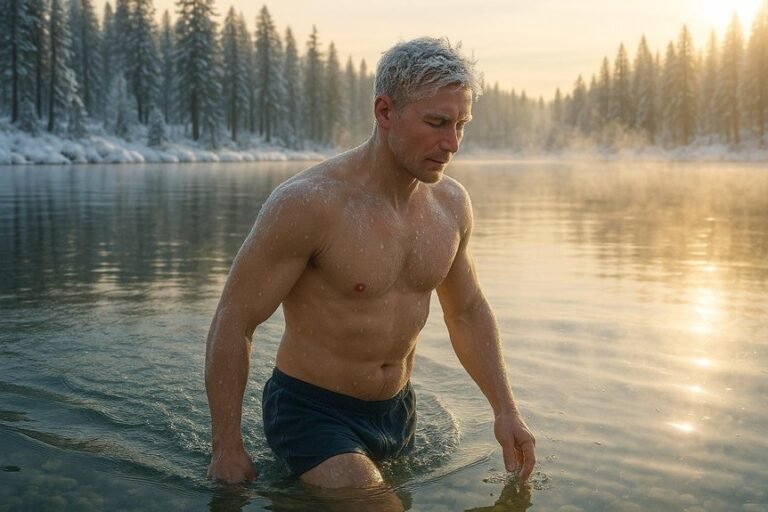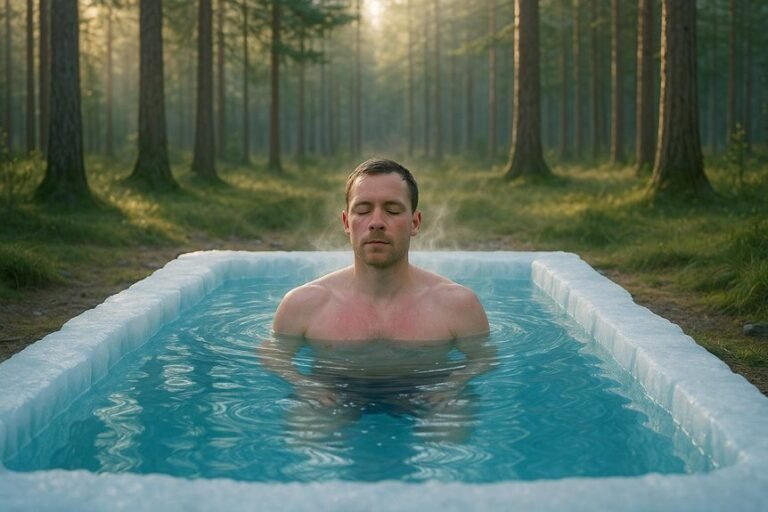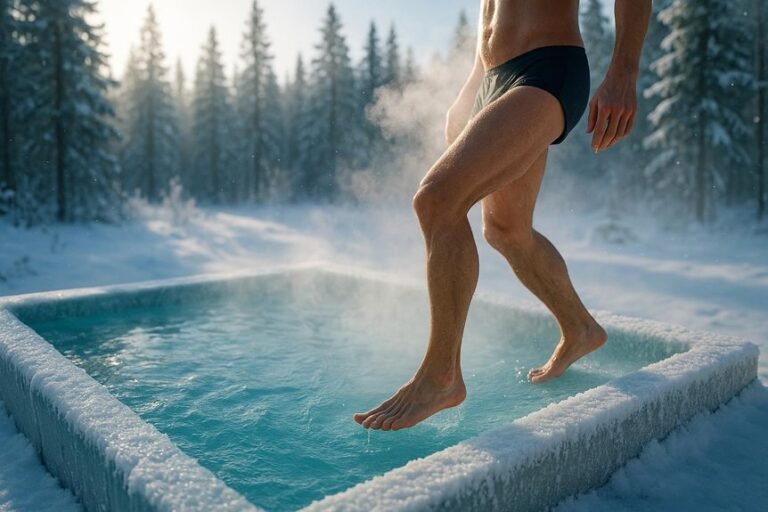
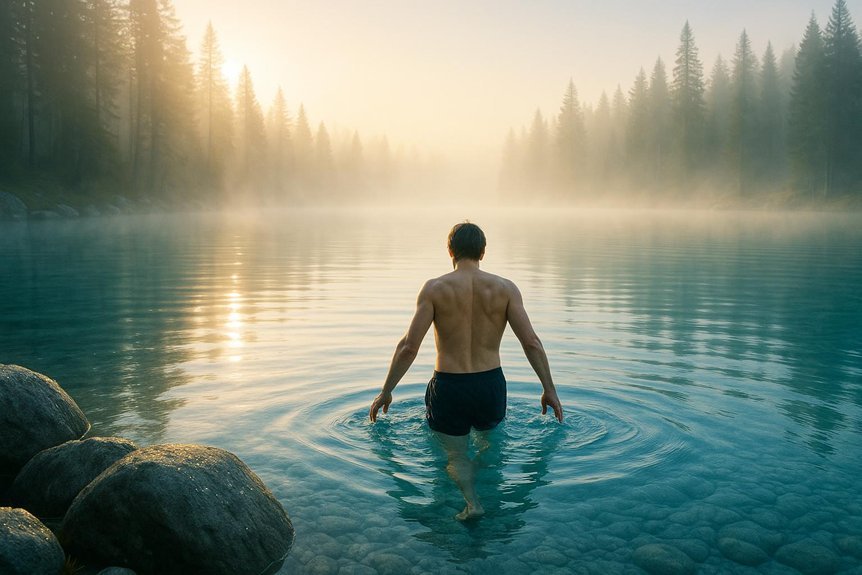
If you want reliable ways to fit cold plunges into your day, timing matters more than you might think: mornings spark alertness and metabolism, midday dips recharge focus, post-workout plunges speed recovery, and early evening sessions help you shift toward rest, though plunging too close to bedtime can disrupt sleep. Your goals, training type, and consistency will shape the best schedule — and a few practical rules will help you choose the right slot.
Key Takeaways
- Morning plunges boost alertness and metabolism, ideal for starting the day energized.
- Midday plunges (60–120s) reset fatigue and sharpen focus during afternoon slumps.
- Post-workout afternoon plunges (60–180s, 10–15°C) aid recovery and reduce muscle inflammation.
- Early evening plunges (1–3 minutes) help transition from work to relaxation without overstimulation.
- Time late-evening plunges ≥60–90 minutes before bed to lower core temperature without disrupting sleep.
Morning: Boost Alertness and Metabolism
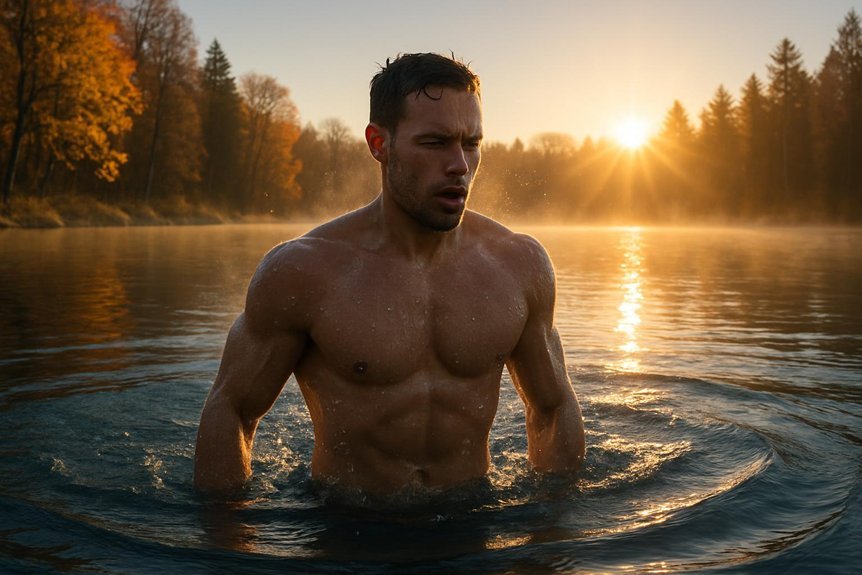
If you start your day with a cold plunge, you’ll likely notice a quick lift in alertness as your body reacts to the sudden drop in temperature; the shock triggers a surge of adrenaline and norepinephrine that sharpens focus and raises heart rate. You’ll find that this immediate arousal can help you shift from sleep to activity, making morning tasks feel clearer and more manageable. Cold exposure also nudges your metabolism upward as thermogenesis increases to maintain body temperature, which can modestly raise calorie burn. Start with brief immersions and gradually extend duration as you adapt, monitor how your breathing and limbs respond, and avoid prolonged exposure if you have cardiovascular concerns. Pairing the plunge with light movement enhances circulation and sustained alertness.
Midday: Recharging During the Day
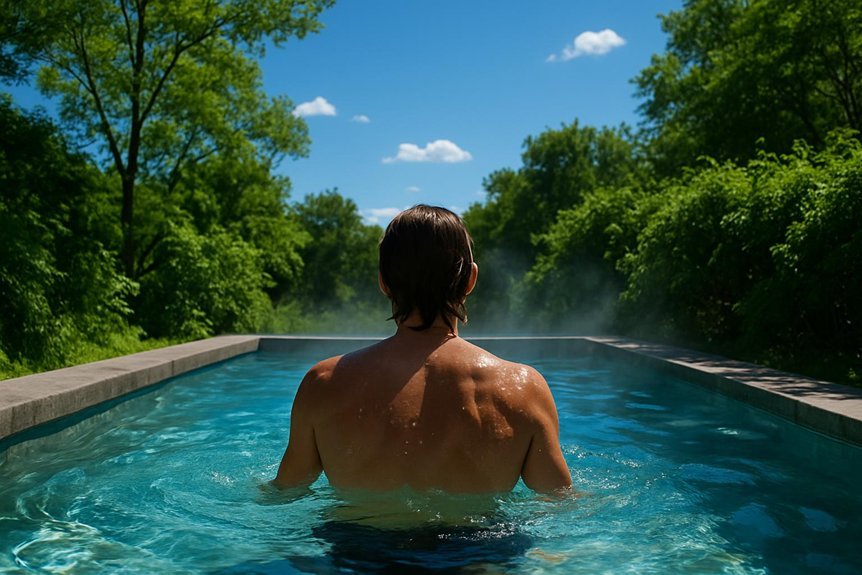
When you slot a cold plunge into the middle of your day, it can serve as a precise reset that reduces fatigue and sharpens mental clarity, helping you move from lagging energy to renewed focus without a heavy caffeine crash. You can use a short, controlled plunge after lunch or a mid-afternoon lull to recalibrate your nervous system, increasing alertness through cold-induced norepinephrine release. Keep sessions brief—60 to 120 seconds—to gain benefits without overstressing the body, and breathe steadily to manage the shock response. Combine the plunge with light movement or a brief walk to warm up gradually afterward. If you have cardiovascular concerns, check with a clinician first; otherwise, midday plunges can boost productivity and calm, practical focus.
Afternoon: Enhance Post-Workout Recovery
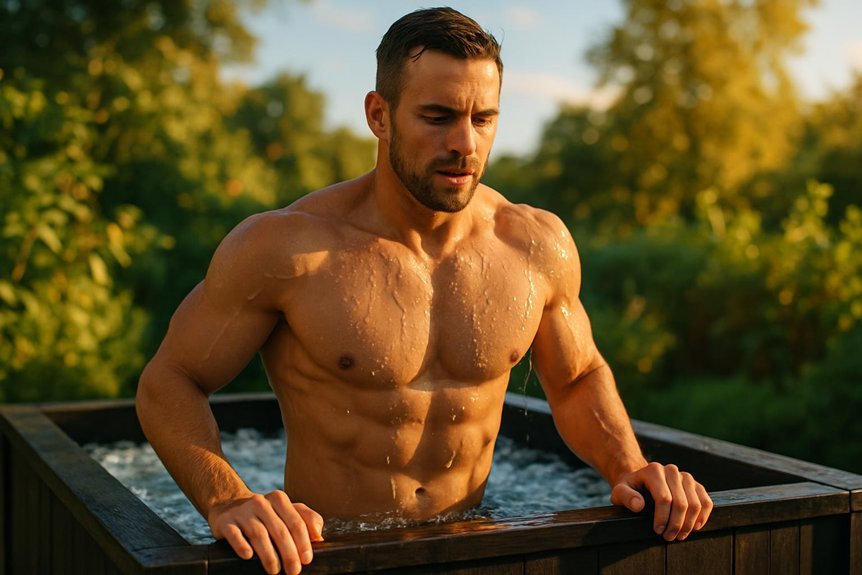
After a strenuous workout, slipping into a cold plunge can speed recovery by reducing muscle inflammation and flushing metabolic waste, so you’ll feel fresher for your next session; keep the immersion brief—typically 60 to 180 seconds—to gain anti-inflammatory benefits without blunting the adaptive signaling that builds strength. In the afternoon, you’ve already raised cardiac output and stressed muscle fibers, so a short, controlled cold exposure helps constrict blood vessels, limit swelling, and reduce soreness. Use water around 10–15°C (50–59°F) if you tolerate it, and monitor your breathing to stay calm. Combine the plunge with gentle cooldown moves and rehydration to support nutrient delivery. Avoid overly long or repeated plunges after strength work, and consult professionals if you have health concerns.
Early Evening: Transition From Work to Relaxation
As you shift out of work mode and start winding down, a brief cold plunge can act like a clean break—resetting your nervous system, lowering cortisol, and signaling your body that it’s time to change toward rest. You’ll feel alertness drop and tension ease as the cold interrupts the busy mental loop, offering a clear boundary between obligations and personal time. Keep sessions short — typically one to three minutes — to get benefits without overstimulating. Combine the plunge with slow breathing afterward to encourage parasympathetic activation and mental clarity. Plan it before dinner or light evening activities so you maintain a relaxed rhythm without pushing your sleep timing. Track how you respond and adjust duration or timing for personal comfort and effect.
Late Evening: Wind Down or Risk Sleep Disruption
If you take a cold plunge late in the evening, you’ll speed the drop in core body temperature that normally helps you fall asleep, which can be beneficial if timed correctly. However, cold exposure can also trigger cortisol release and a temporary rise in alertness, so plunging too close to your intended sleep onset may keep you awake. We’ll look at how to balance timing and intensity so you can wind down without risking sleep disruption.
Body Temperature Drop
While a cold plunge late in the evening can sharply lower your core temperature and help you feel calm and relaxed, it can also interfere with the natural temperature decline your body needs for sleep. You’ll experience a rapid drop in skin and core temperature that signals your body to conserve heat and adjust circulation; this physiological shift can promote relaxation but may confuse circadian cues if timed poorly. If your internal thermostat is pushed too low close to bedtime, you might struggle to reach the gradual cooling trajectory that supports restorative sleep stages. To use this effect wisely, plan plunges earlier in the evening or allow adequate time for gradual rewarming, letting your circadian rhythm reassert its normal temperature pattern.
Sleep Onset Timing
Lowering your core temperature through a late-evening cold plunge can feel soothing, but it also affects how quickly you fall asleep and whether that sleep is restorative. If you time a plunge about 60–90 minutes before bed, you may speed sleep onset by encouraging the natural drop in core temperature that signals sleep, helping you fall asleep more easily. However, plunging too close to bedtime can be stimulating for some people, causing a brief alerting response or shivering that delays sleep onset. Pay attention to your individual reaction: try different intervals and note how long it takes you to fall asleep and how rested you feel in the morning. Use shorter, monitored sessions at first, and avoid vigorous activity right after plunging.
Cortisol and Alertness
Because a cold plunge can trigger a brisk hormonal response, you should consider timing it carefully in the late evening to avoid boosting cortisol and alertness just when you want to wind down. If you plunge too close to bedtime, the sudden cold exposure can elevate cortisol and norepinephrine, sharpening focus and increasing heart rate; those changes make it harder to fall asleep. You can still use cold therapy effectively by scheduling it earlier in the evening, allowing hormones to normalize before lights out, or by choosing gentler contrast techniques that reduce sympathetic activation. Pay attention to your personal reaction across several nights, and adjust timing based on how quickly your body returns to a relaxed state, prioritizing consistent sleep onset and quality.
After Intense Cardio vs. After Strength Training
After intense cardio, you’ll often want a cold plunge to reduce inflammation and speed short-term recovery so you can hit your next session feeling fresher. After strength training, though, you should weigh the benefits of reduced soreness against the possibility that cold exposure can blunt long-term muscle and strength adaptation, especially if used immediately and frequently. Think about your goals and timing—use cold baths for quick turnaround after cardio, but consider delaying or limiting them around heavy resistance work if you prioritize strength gains.
Recovery Pathway Differences
While both intense cardio and heavy resistance sessions leave you fatigued, the underlying recovery pathways they trigger are markedly different, and those differences should guide when and how you use a cold plunge. Cardio mainly stresses your cardiovascular and metabolic systems, producing systemic inflammation and oxidative stress that benefit from rapid cooling to reduce soreness and restore heart rate variability; a cold plunge soon after hard intervals can speed symptomatic relief and help you recover for another session. Strength training provokes microtears and anabolic signaling in muscle fibers, where early excessive cooling can blunt protein synthesis; if your goal is muscle growth, delay prolonged plunges until initial inflammatory signaling subsides, or use shorter, milder exposures that ease discomfort without fully suppressing repair mechanisms.
Timing for Adaptation
If you want to optimize long-term gains, timing your cold plunge depends on whether you’re prioritizing cardiovascular recovery or muscle adaptation. After intense cardio, plunging soon after exercise can reduce inflammation, lower heart rate, and speed perceived recovery, letting you train again sooner with less fatigue. It helps blunt excessive soreness and supports repeated aerobic sessions. After strength training, however, immediate cold exposure can blunt the inflammatory signals that drive muscle growth and strength gains; waiting several hours or using a warm cooldown first preserves anabolic signaling. If your goal is endurance and frequent cardio, cold plunge early. If you prioritize hypertrophy or maximal strength, delay the plunge until later in the day or after recovery-focused sessions.
On Rest Days vs. Training Days
When deciding whether to cold plunge on rest days or training days, consider how each choice affects recovery, inflammation, and future performance, because timing can shift the balance between short-term relief and long-term adaptation. You’ll get immediate soreness reduction and lowered inflammation if you plunge after intense sessions, which helps you feel ready for daily activities, but frequent post-workout plunges can blunt some strength and hypertrophy signals if used habitually. On rest days, cold immersion supports recovery without interfering with the acute adaptation window, letting physiological repair processes proceed while reducing residual fatigue. Match your strategy to goals: prioritize post-session plunges for rapid symptom relief and schedule rest-day plunges when maximizing training adaptations matters more. Monitor how you feel and adjust accordingly.
Short Cold Plunge vs. Extended Immersion Timing
Because immersion duration directly changes the physiological stress you apply, choosing a short cold plunge (typically 1–3 minutes) versus an extended soak (5–15+ minutes) should be guided by your goals, tolerance, and timing relative to training. If you want quick alertness, reduced surface inflammation, or a fast recovery nudge, short plunges deliver benefits with lower cardiovascular strain and less risk of numbness. Extended immersions amplify metabolic and hormonal responses, potentially improving cold adaptation and longer-lasting analgesia, but they increase stress and require careful monitoring. Match duration to intent: use brief exposures for pre-workout activation or quick recovery, and reserve longer soaks when your aim is adaptation or deeper pain relief. Monitor how your body responds and adjust progressively to gain consistent benefits.
Personal Schedule, Consistency, and Safety Considerations
Finding the right place for cold plunges in your week matters as much as the time and duration you choose; after deciding between short and extended immersions, plan sessions that fit your energy rhythms, training schedule, and recovery needs. You’ll get more benefit from regular, predictable plunges than from sporadic extremes, so pick days you can commit to and build gradual progressions in duration and temperature. Match sessions to workouts: do brief plunges after light cardio, and avoid deep immersion immediately after intense strength sessions if you rely on inflammation for adaptation. Prioritize safety—have a buddy or supervision, limit initial exposure, monitor breathing and skin color, and exit if you feel numbness or dizziness. Adjust frequency for illness, medication, or cardiovascular concerns.
FAQ
Can Cold Plunges Affect Long-Term Immune Function?
FAQ 1: Can cold plunges enhance my immune function?
Cold plunges can modulate immune responses and may provide short-term benefits, such as improved circulation and inflammation control. However, their impact on long-term immune function is still uncertain and can vary based on individual factors.
FAQ 2: What factors influence the effectiveness of cold plunges on immune health?
The effectiveness of cold plunges in promoting immune health depends on several factors, including the consistency of use, the intensity of the exposure, and the individual’s overall health status.
FAQ 3: Is there sufficient research on the long-term effects of cold plunges on immunity?
Current research on the long-term effects of cold plunges on immune function is limited and requires further investigation to draw definitive conclusions.
Is Timing Different for People With Cardiovascular Conditions?
FAQ: Is it safe for individuals with cardiovascular conditions to engage in cold immersion?
If you have cardiovascular conditions, it’s essential to avoid sudden cold immersion. Shorter and milder exposures are safer, but you should always consult your doctor before attempting any cold therapy.
FAQ: What kind of cold exposure is recommended for those with heart issues?
Individuals with cardiovascular conditions should consider shorter and milder cold exposures under monitored circumstances. This approach minimizes risks associated with sudden temperature changes.
FAQ: Should people with cardiovascular conditions seek guidance before cold immersion?
Yes, personalized guidance based on your medications and heart status is crucial. Consulting with your doctor ensures that any cold exposure is safe and appropriate for your specific health needs.
Can Children Safely Do Cold Plunges and When?
FAQ: Can children safely participate in cold plunges?
Yes, children can sometimes do cold plunges, but it’s essential to get pediatrician approval first.
FAQ: What precautions should be taken when children do cold plunges?
When allowing children to do cold plunges, ensure they have much shorter, supervised exposures and avoid extremely cold temperatures.
FAQ: How can I monitor my child during a cold plunge?
Keep an eye out for signs of shivering or distress. If your child shows any discomfort, it’s important to stop the cold plunge immediately.
Do Medications Alter Safe Cold Plunge Timing?
FAQ: Can medications affect my ability to safely use cold plunges?
Yes, certain medications can influence your body’s response to cold exposure. It’s important to consult with your healthcare provider to understand how your specific medications may impact your safety during cold plunges.
FAQ: Which types of medications should I be concerned about before cold plunging?
Medications such as beta-blockers, antidepressants, and blood pressure medications can alter heart rate, blood pressure, and thermoregulation, making cold plunges potentially risky. Always discuss your medication regimen with your prescriber before trying cold exposure.
FAQ: How do medications alter my body’s response to cold?
Medications can affect various physiological responses, including heart rate and blood circulation. These changes can impair your ability to safely tolerate the shock of cold water, so it’s crucial to be aware of these effects.
How Does Cold Plunge Timing Affect Brown Fat Activation?
FAQ: How does cold plunge timing influence brown fat activation?
Cold plunge timing can significantly enhance brown fat activation. The best results occur when cold exposure follows periods of fasting or morning physical activity.
FAQ: Is consistent cold exposure throughout the day beneficial for brown fat?
Yes, repeated cold exposures throughout the day can lead to a gradual increase in brown adipose tissue recruitment and overall metabolic activity, contributing to improved energy expenditure.
FAQ: What is the optimal time for cold plunges to maximize brown fat benefits?
To maximize brown fat activation, it is ideal to engage in cold plunges after fasting or following morning workouts, as this timing can enhance the body’s thermogenic response.
Final Thoughts
You can time cold plunges to match your goals and daily rhythm: use mornings for alertness and metabolism, midday for a quick recharge, post-workout for reduced inflammation, and early evening to shift toward relaxation, while avoiding late-night immersions too close to bedtime to protect sleep. Choose shorter or longer sessions based on tolerance, and adapt plunges on training versus rest days. Stay consistent, prioritize safety, and personalize timing to get the most benefit.