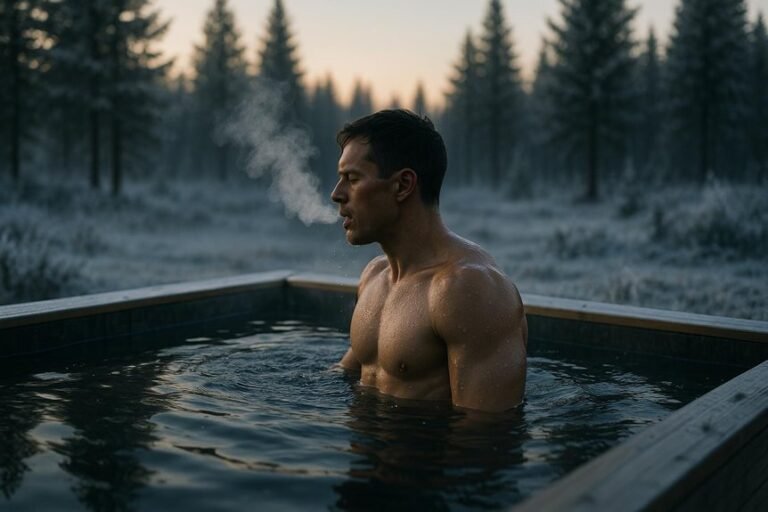
If you lift regularly and want to speed recovery without compromising gains, a targeted cold-plunge protocol can help by reducing soreness and inflammation while you manage training adaptations; timing, temperature and frequency matter — short, cool immersions after low-intensity sessions differ from delayed, briefer exposures after heavy, hypertrophy-focused workouts — and with the right plan you’ll protect anabolic signaling and still reap anti-inflammatory benefits, so let’s outline practical steps, safety checks and how to track what actually works for you.
Key Takeaways
- Use 10–15°C water for 5–15 minutes post-strength sessions to reduce soreness while minimizing hypertrophy blunting.
- Delay cold immersion 4–8 hours after heavy lifting when prioritizing muscle growth to allow anabolic signaling.
- Limit cold plunges to 0–2 times weekly during hypertrophy phases, 2–4 times weekly for soreness management.
- Avoid pre-workout cold and monitor symptoms; stop if chest pain, dizziness, or severe numbness occurs.
- Track resting heart rate, sleep, soreness, and performance for 2–4 weeks to adjust plunge timing and frequency.
How Cold Plunges Affect Muscle Recovery and Adaptation
Although brief cold exposure can sharply reduce your immediate soreness after intense lifting, it also interacts with the cellular processes that drive long-term muscle adaptation. You’ll find cold plunges blunt inflammation and slow some signaling pathways like mTOR that promote protein synthesis, so using them changes how muscles remodel after stress. For short-term comfort and reduced swelling they’re effective, but regular or immediate cold after key strength sessions can diminish strength gains by limiting hypertrophy signals. You should weigh recovery needs against training goals: use cold when reducing pain or preparing for another session soon, and avoid it when you prioritize maximal muscle growth from a hard strength workout. Monitor responses, adjust frequency, and pair cold with nutrition and sleep for best results.
Timing: When to Use Cold Immersion Relative to Workouts
You’ll want to weigh when to use cold immersion because timing can change both immediate soreness and long-term strength gains. Immediately post-workout cold can reduce inflammation and pain, whereas waiting a few hours or using it on recovery days may better preserve training adaptations. Before exercise you should be cautious, since cold exposure can blunt muscle activation and reduce performance if done too close to a session.
Immediately Post-Workout Effects
If you want to speed recovery after a hard strength session, timing your cold immersion matters because it can change how your muscles adapt and how sore you feel; applying a cold plunge immediately after training tends to reduce inflammation and pain but may also blunt some of the cellular signals that drive long-term strength gains. You’ll experience reduced swelling, lower perceived soreness, and quicker short-term return to activity when you immerse within 0–30 minutes post-workout, especially after very intense sets. Use 8–10 minutes at 10–15°C for general recovery; shorter or cooler baths increase vasoconstriction and discomfort. If you prioritize acute recovery and training frequency, immediate plunges help. Monitor how your performance and soreness respond over several sessions, and adjust duration and temperature accordingly.
Delayed Immersion Timing
When you delay cold immersion for several hours after a strength session, you give the inflammatory and anabolic signaling that drives muscle adaptation time to occur, so later plunges can relieve soreness without substantially blunting long-term strength gains. Waiting four to eight hours, or even until the evening after a morning lift, tends to strike a practical balance: you let early cellular responses unfold, then use cold therapy to reduce pain, swelling, and perceived fatigue. Apply 10–15 minutes at 10–15°C for mature lifters who want soreness relief without compromising strength adaptations; novices may prefer slightly shorter exposures. Monitor how your lifts and recovery feel over weeks, and adjust timing based on training intensity, sleep, and subsequent sessions to optimize both performance and comfort.
Pre-Exercise Considerations
Because cold immersion can blunt some of the acute inflammatory and neural responses that help prepare your muscles and nervous system for heavy lifts, you should be deliberate about using it before a strength session rather than treating it as an automatic pre-workout routine. If you’re doing maximal strength or power training, avoid cold plunges immediately beforehand; reduced muscle temperature and dampened neural drive can lower force production and coordination. For moderate sessions or technique-focused work, brief, mild exposure (cold showers or short immersion) done at least 60–90 minutes prior may be acceptable, since some function returns as you rewarm. Use individualized testing: try different timings in non-critical sessions and track performance. When in doubt, reserve cold immersion for post-workout recovery or separate recovery days.
Temperature and Duration Guidelines by Training Goal
While exact numbers can vary with individual tolerance and environment, tailoring your cold-plunge temperature and duration to the specific training goal will maximize recovery benefits and limit unwanted side effects. For power and strength sessions where you want to preserve adaptations, use milder cold: 12–15°C (54–59°F) for short exposures of 5–10 minutes, which reduces inflammation without blunting hypertrophic signaling. For intense metabolic or high-volume workouts aimed at reducing soreness and accelerating next-day performance, colder water at 8–12°C (46–54°F) for 10–15 minutes is appropriate. For active recovery or mobility days, 15–18°C (59–64°F) for 5–8 minutes provides refreshment with minimal physiological disruption. Adjust downward cautiously, monitor symptoms, and prioritize gradual progression based on how you feel.
Practical Step-by-Step Cold Plunge Protocol
You’ll start by choosing the right timing and duration based on your training cycle and recovery needs, typically after intense sessions and for 5–15 minutes depending on goals. Next, set the temperature and prepare the setup—aim for 10–15°C (50–59°F) for general recovery, or slightly colder if targeting acute inflammation, and make sure your tub, thermometer, and a towel or warm clothes are ready. As you progress through sessions, monitor how your body responds and adjust both time and temperature to balance performance benefits with comfort and safety.
Timing and Duration
To get the most from cold-plunge recovery, plan the timing and duration around the type and intensity of your training session, the goals you want to achieve, and how your body actually responds. After high-volume or maximal-effort strength work, wait 30–60 minutes before plunging to allow acute anabolic signaling and muscle blood flow to begin, then use a shorter immersion of 5–10 minutes to reduce soreness without blunting adaptation. For low-intensity sessions or conditioning-focused days, you can plunge sooner and for 10–15 minutes to prioritize recovery and comfort. If your goal is performance within hours, keep immersion brief and conservative. Track how you feel, adjust gradually, and avoid repetitive long plunges that impair long-term strength gains.
Temperature and Setup
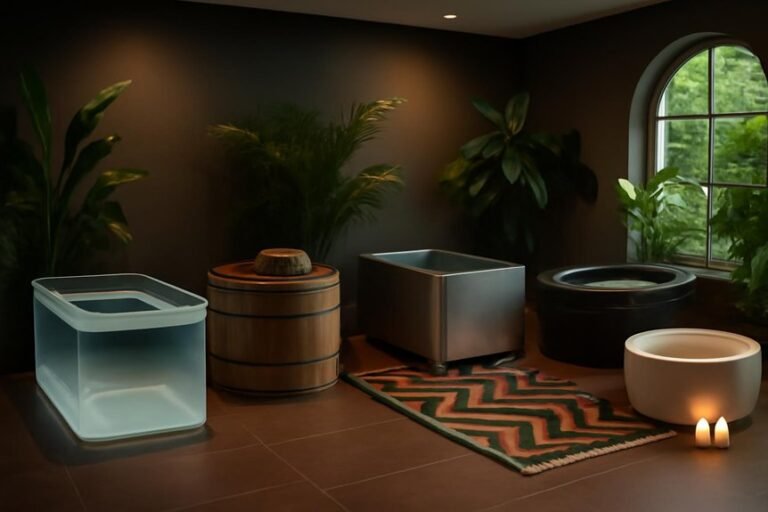
Anyone preparing a cold plunge needs to get the temperature and setup right, because those details determine safety, comfort, and the physiological effects you’ll get. Aim for 10–15°C (50–59°F) for general recovery after strength sessions; the lower end gives stronger vasoconstriction and inflammation control, while the upper end preserves some muscle temperature. Use a reliable thermometer and adjustable cooling or ice to hit your target, and let the water stabilize before you enter. Position the tub where you can exit easily, have a chair or towel nearby, and avoid slippery surfaces. Limit drafts and guarantee easy access to warm clothing. If you have cardiovascular issues, check with a clinician first; otherwise start conservatively and adjust based on how your body responds.
Contraindications, Safety and Monitoring During Cold Exposure
Because cold immersion affects circulation, nerve function, and cardiovascular stress, you should know who shouldn’t use plunges and what signs demand stopping the session. You should avoid cold plunges if you have uncontrolled hypertension, heart disease, recent myocardial infarction, severe Raynaud’s, peripheral vascular disease, uncontrolled diabetes, or pregnancy without medical clearance. If you have neuropathy or sensory deficits, use extreme caution because you might not notice harmful cold. Always consult your healthcare provider when in doubt.
During a session, monitor breathing, skin color, limb warming, and mental clarity; if you feel chest pain, severe shortness of breath, dizziness, numbness that doesn’t improve, or confusion, exit immediately. Have a trained partner nearby, set time limits, and rewarm gradually to reduce risk.
Integrating Cold Plunges With Other Recovery Modalities
When you combine cold plunges with other recovery methods, plan the sequence and timing deliberately so each modality complements rather than counteracts the others; for example, cold immersion can blunt inflammation and soreness after intense strength sessions, but it may also interfere with muscle adaptation if used immediately after certain types of training. You should pair cold plunges with active recovery, like light cycling or mobility work, to promote circulation before immersion, and use compression or massage later to sustain circulation and tissue remodeling. Contrast therapy can be useful when timed properly, alternating warmth to increase blood flow and cold to reduce swelling, but avoid aggressive modalities that negate hypertrophy signals right after lifting. Track responses, adjust combinations, and prioritize goals—recovery, performance, or adaptation—when scheduling modalities.
Adjusting Frequency Across Training Phases and Intensity
As your training shifts between heavy, high-intensity blocks and lighter, technique-focused phases, you’ll need to adjust how often you use cold plunges so they support recovery without undermining adaptation; higher-intensity strength weeks generally call for more frequent, shorter immersions to manage soreness and inflammation, while hypertrophy or strength-skill phases benefit from fewer or delayed plunges to preserve anabolic signaling. Plan short 5–8 minute plunges 2–4 times weekly during maximal effort blocks to reduce acute pain and speed readiness, keeping temperatures moderate. During hypertrophy or skill emphasis, limit plunges to 0–2 sessions per week or postpone them 24–48 hours after training to avoid blunting long-term gains. Always align frequency with training goals, fatigue levels, and competition timelines.
Measuring Recovery Outcomes and Tracking Progress
How will you know if cold plunges are actually helping your recovery? Track objective and subjective markers consistently: log resting heart rate, sleep quality, perceived muscle soreness, and workout performance. Use simple tools like a heart-rate monitor, a sleep app, and a training journal to record trends over weeks, not days. Note whether you lift heavier, complete more volume, or recover faster between sets. Include occasional performance tests—vertical jump, timed reps, or 1–3 rep max checks—to quantify strength and power changes. Monitor mood and motivation, since psychological recovery affects training adherence. Compare periods with and without cold plunges to isolate effects, and allow at least two to four weeks per condition. Adjust your protocol based on clear, repeatable improvements rather than single data points.
FAQ
Can Cold Plunges Affect Long-Term Strength Gains or Muscle Hypertrophy?
FAQ: Do cold plunges after workouts affect long-term strength gains?
Yes, using cold plunges immediately after most workouts can impair long-term strength gains by reducing the necessary inflammation that drives muscle adaptation.
FAQ: Can cold plunges hinder muscle hypertrophy?
Yes, frequent post-workout cold plunges can blunt muscle hypertrophy by minimizing the body’s natural inflammatory response, which is crucial for muscle growth.
FAQ: How should I time my cold plunges?
Instead of relying on cold plunges after every workout, it’s advisable to time them strategically around your training sessions to avoid negatively impacting strength and muscle gains.
Can I Combine Cold Plunges With Sauna or Hot Therapy in the Same Session?
Can I combine cold plunges with sauna or hot therapy?
Yes, you can combine cold plunges with sauna or hot therapy in a single session. This practice, known as contrast therapy, can enhance circulation and aid in recovery.
What is contrast therapy?
Contrast therapy involves alternating between hot and cold treatments, such as using a sauna followed by a cold plunge. This method can stimulate blood flow and improve muscle recovery.
How should I approach duration and frequency?
While combining these therapies can be beneficial, it’s important not to overdo the duration or frequency of each session. Pay attention to your body’s signals to ensure safety.
Are there any safety precautions I should take?
Always listen to your body when practicing contrast therapy. If you experience discomfort or adverse effects, it’s advisable to stop and consult a healthcare professional if necessary.
Do Wet Swimsuits or Clothing Change Cold Plunge Effectiveness?
FAQ: Do wet swimsuits or clothing affect cold plunge effectiveness?
Yes, wearing wet swimsuits or clothing can reduce the effectiveness of cold plunges. This is because they act as insulators, slowing the cooling process and altering the thermal stress response.
FAQ: How do wet swimsuits impact vasoconstriction?
Wet swimsuits hinder vasoconstriction, which is a key physiological response during cold exposure. With added insulation from wet clothing, your body may not respond as effectively to the cold.
FAQ: Should I remove layers for a better cold plunge experience?
Yes, removing wet layers can enhance your cold plunge experience. By eliminating insulation, you promote a quicker and more effective adaptation to the cold, leading to better metabolic responses.
Are There Age Limits or Special Considerations for Older Athletes?
FAQ: What special considerations should older athletes keep in mind?
Older athletes should prioritize shorter exposure times during physical activities and ensure they’re in warmer temperatures to avoid injury. It’s essential to listen to your body and stop if you feel unwell.
FAQ: Do older athletes need medical clearance?
Yes, older athletes should seek medical clearance, especially if they have pre-existing heart or circulation issues. This helps ensure safety while participating in physical activities.
FAQ: How can older athletes adapt to exercise safely?
Gradual adaptation is crucial for older athletes. Start with lighter activities and gradually increase intensity, while monitoring for symptoms like numbness or dizziness.
Can Cold Plunges Influence Sleep Quality or Nighttime Recovery Rituals?
FAQ 1: Can cold plunges improve sleep quality?
Yes, cold plunges can enhance sleep quality by promoting relaxation and lowering your core body temperature. This can lead to a more restful night if done at the right time.
FAQ 2: When is the best time to take a cold plunge for optimal sleep?
To maximize the benefits for sleep, it’s best to take a cold plunge at least a few hours before bedtime. This timing helps to prevent any temporary increases in alertness and heart rate that could disrupt your ability to fall asleep.
FAQ 3: How do cold plunges aid in nighttime recovery?
Cold plunges can aid in nighttime recovery by reducing inflammation and muscle soreness. This can help your body recover more effectively after physical activity, leading to better overall rest and rejuvenation.
Final Thoughts
You can use cold plunges strategically to reduce soreness and aid recovery, but you should time them and limit frequency to protect long-term strength and hypertrophy gains. For routine sessions, immerse within 5–15 minutes at 10–15°C for up to 15 minutes; after very intense workouts, wait 4–8 hours to preserve anabolic signaling. Monitor how you feel, follow safety precautions, and combine cold immersion with sleep, nutrition, and active recovery for best results.