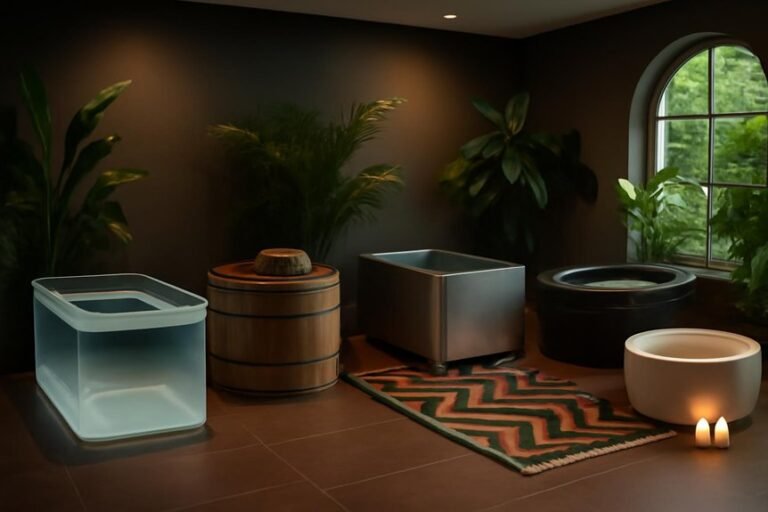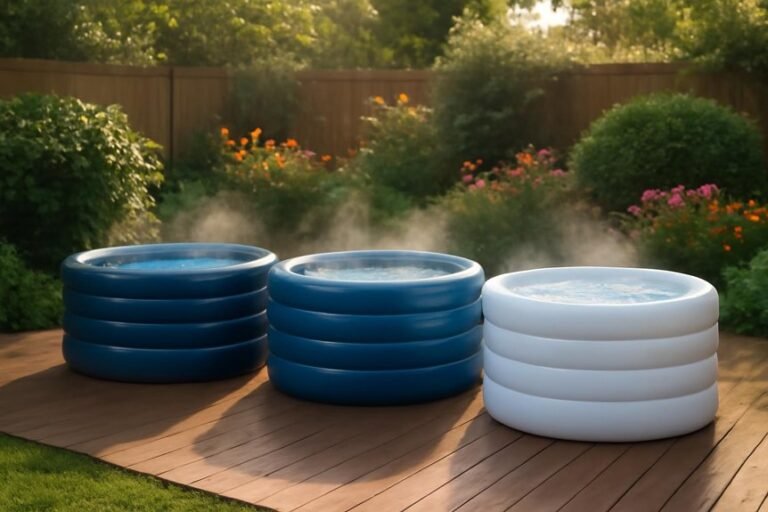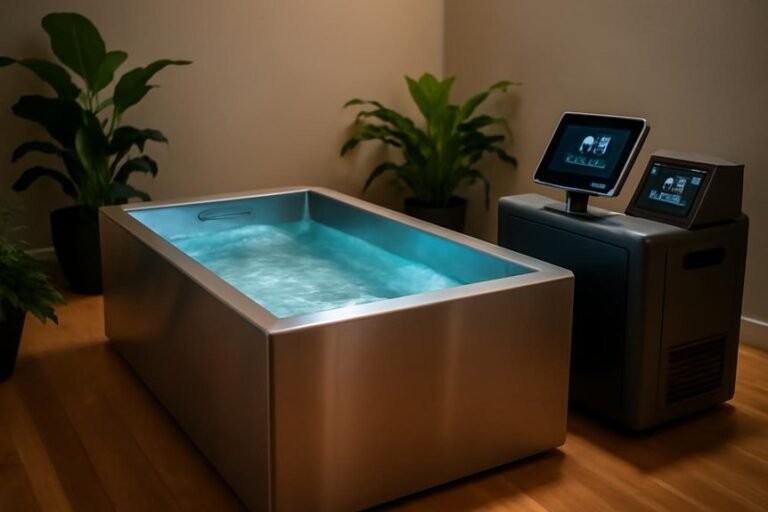
If you manage a cold plunge, you’ll notice water chemistry behaves differently at low temperatures, so you need a clear plan to keep it safe and comfortable. pH, alkalinity, sanitizer strength, and calcium levels all interact more slowly but more stubbornly than in warm tubs, and circulation plus filtration become even more essential to prevent biofilm and scaling. Get these basics right and you’ll avoid common problems — next, learn how to adjust each parameter effectively.
Key Takeaways
- Maintain pH 7.2–7.8 for comfort, sanitizer effectiveness, and equipment protection.
- Keep total alkalinity stable (measure separately) to prevent pH swings; adjust with bicarbonates as needed.
- Use an appropriate sanitizer (chlorine or bromine) and monitor levels daily, shocking when combined chlorine or cloudiness appears.
- Run filtration to achieve several daily turnovers, clean filters regularly, and position flow for gentle, even circulation.
- Test pH, sanitizer, alkalinity, and calcium hardness regularly; log results and winterize lines, filters, and surfaces before freezing temperatures.
Why Cold Water Chemistry Is Different
Because temperature affects chemical reactions, cold plunge water behaves differently than the hot or room-temperature pools you might be used to. You’ll notice slower reaction rates: sanitizer and oxidizer molecules move less and react more slowly, so contact times and dosing strategies need adjustment. Solubility of gases increases in colder water, meaning oxygen and carbon dioxide levels shift and can influence water balance. Biological activity also drops; bacteria and algae metabolism slows, reducing growth but not eliminating contamination risk. Corrosion processes change too, as metal chemistry and deposit formation respond to lower temperatures. When you manage a cold plunge, you’ll account for these factors—adjusting treatment schedules, monitoring more frequently, and relying on measurements rather than assumptions.
Ph and Total Alkalinity Fundamentals
Now that you’ve considered how cold temperatures slow reactions and alter gas solubility, it’s important to look at pH and total alkalinity, because they govern many of the same processes in a cold plunge. pH measures how acidic or basic the water is, and even small shifts can change sanitizer effectiveness, corrosion risk, and swimmer comfort; total alkalinity acts as the water’s buffer, resisting pH swings by absorbing or releasing hydrogen ions. You’ll monitor pH to keep it within a narrow range, typically around 7.2–7.8, because that range balances comfort and material protection. You’ll measure alkalinity separately, aiming for stable buffering so pH adjustments aren’t frequent, and you’ll correct low alkalinity with bicarbonates or reduce it carefully if it’s too high.
Choosing and Managing Sanitizers for Cold Plunges
When choosing a sanitizer for your cold plunge, you’ll weigh chlorine versus bromine based on factors like effectiveness at low temperatures, residual smell, and maintenance needs. You’ll also consider non-chlorine oxidizers as occasional shock treatments to break down organics without raising halogen levels, and learn how each option affects water balance. Finally, you’ll set a regular testing and dosage routine—using test strips or kits—to keep sanitizer levels in the safe, effective range and prevent cloudy or contaminated water.
Chlorine vs. Bromine
If you’re deciding between chlorine and bromine for a cold plunge, weighing their chemical behavior, effectiveness at low temperatures, and maintenance demands will steer you to the best choice for your setup. Chlorine acts quickly, is widely available, and gives strong disinfection even at cold temperatures if you maintain proper free chlorine levels and pH; you’ll need to monitor combined chlorine (chloramines) and adjust more often. Bromine stays more stable across pH ranges and forms fewer irritating byproducts, so it can feel gentler on skin and eyes, but it’s slower to act and costs more. Both require regular testing, shock treatments, and safe storage. Choose chlorine for fast, economical control; pick bromine for stability and lower odor if budget allows.
Non-chlorine Oxidizers
Because non-chlorine oxidizers don’t rely on sustained free halogen residuals, they can be an attractive option for cold plunges where you want fast removal of organic contaminants without continuous chlorine or bromine exposure. You’ll find common choices like potassium monopersulfate (MPS) and hydrogen peroxide blends that break down organics and boost overall water clarity. They don’t provide ongoing sanitization, so you’ll use them as shock treatments or supplemental oxidizers alongside a primary sanitizer system. Benefits include reduced odor, gentler chemistry for sensitive skin, and less risk of halogen byproducts, but you must respect contact time and concentration guidelines. Store and handle these oxidizers carefully, avoid mixing with halogens, and follow manufacturer instructions to maintain safe, effective water care.
Sanitizer Dosage & Testing
Although cold plunges operate at lower temperatures and with smaller volumes than typical pools, you still need a clear plan for sanitizer selection, dosing, and testing to keep the water safe and comfortable. You’ll choose between chlorine, bromine, or biguanide systems based on maintenance preference, material compatibility, and user sensitivity. Calculate dose by volume and target residual: for chlorine aim for 1–3 ppm free chlorine, bromine 2–4 ppm, biguanide per manufacturer. Test daily when in frequent use, using reliable test strips or kits, and log results. Shock or oxidize weekly or after heavy use to remove organics. Adjust pH to 7.2–7.8 before dosing for accuracy. Always follow label instructions and local regulations, and store chemicals safely.
Controlling Calcium Hardness and Corrosion Risk
You’ll start by measuring calcium hardness regularly and aiming for the manufacturer-recommended range so the water neither becomes scale-forming nor aggressively soft. To prevent scale, use sequestering agents or adjust alkalinity and pH while routinely brushing surfaces and cleaning filters to remove mineral buildup. For corrosion control, monitor total alkalinity and pH, add corrosion inhibitors when needed, and inspect metal fittings so you can address any early signs of corrosion before they worsen.
Measure and Target Hardness
When you’re managing a cold plunge, keeping an eye on total hardness—primarily calcium ions—is essential because hardness directly affects both scale formation and corrosive risk; aim for a balanced level that protects metal fittings without encouraging deposits on surfaces. Measure hardness regularly with test strips or a titration kit, noting ppm (mg/L) as calcium carbonate; test weekly if use is frequent, or after refills and chemistry adjustments. Target a hardness range typically between 100 and 250 ppm for many cold plunges, though materials and local water chemistry may shift that ideal. Record results, track trends, and adjust treatment gradually to avoid sudden swings. If readings fall outside target, consult product labels or a water professional before dosing corrective chemicals.
Scale Prevention Methods
Because scale can build up quietly over weeks and then cause big problems for pumps and heaters, you’ll want a practical plan that controls calcium hardness while minimizing corrosion risk. First, test hardness regularly and aim for the manufacturer’s recommended range; consistent measurement lets you spot trends before deposits form. Use dilution through partial water changes to lower high hardness without shocking equipment, and consider a sequestrant or scale inhibitor formulated for cold plunge systems to keep calcium in solution. Maintain balanced pH and total alkalinity, since they influence calcium carbonate precipitation. Clean visible scale promptly with nonabrasive, pool-safe products to prevent spread. Finally, document adjustments and results — that lets you refine dosing and maintenance so your cold plunge stays efficient and reliable.
Corrosion Control Strategies
Having kept scale in check, you’ll now need to guard the metal parts and surfaces that can suffer from both high calcium and aggressive water chemistry; managing hardness and corrosion together prevents one fix from making the other worse. Start by testing pH, alkalinity, and calcium hardness regularly, because balanced pH and adequate alkalinity reduce corrosivity while appropriate hardness prevents under-deposit corrosion. Use corrosion inhibitors or sequestrants designed for plunge pools to coat metals and bind dissolved metals, and choose materials like stainless steel or plastic fittings where possible. Control temperature swings and minimize stagnant zones with gentle circulation to limit localized attack. If you spot pinholes, verdigris, or metal staining, act fast: adjust chemistry, add inhibitors, and consult a technician to avoid structural damage and maintain water safety.
Filtration and Circulation Best Practices
Although filtering and circulating cold plunge water might seem straightforward, getting both right is essential to keep the bath clean, safe, and pleasant to use. You should choose a filter rated for fine particles and biological matter; cartridge or sand filters work well if sized to your plunge volume and flow rate. Run circulation long enough to turn over the entire volume several times daily, and position inlets and outlets to create gentle, even flow without strong currents that cool users. Backwash or clean cartridges on a schedule based on load, and inspect seals, valves, and pump performance regularly to avoid leaks or stagnation. When upgrading equipment, prioritize energy-efficient pumps with variable-speed control to balance filtration effectiveness and operating cost.
Testing Schedule and How to Use Test Kits
When you set up a testing schedule for your cold plunge, aim for consistency and practicality so you catch problems early and keep the water safe and comfortable; simple routines make it far easier to track trends and respond before issues escalate. Test pH and sanitizer daily or before each use if multiple people share the plunge; measure alkalinity and calcium hardness twice weekly, and check total dissolved solids and temperature weekly. Use test strips or liquid kits as directed: dip or add drops, compare promptly to the color chart, and record results with date and time. Calibrate digital meters per manufacturer instructions and store kits dry and out of heat. Keep a log, note adjustments you make, and review patterns to guide maintenance.
Algae, Biofilm, and Microbial Control Strategies
To keep your cold plunge safe and clear, you’ll want to prevent algae growth by controlling light exposure and maintaining proper sanitizer and pH levels. You should also manage biofilm by regularly brushing surfaces, flushing filters, and using targeted enzymatic or oxidizing treatments to break up slimy build-up before it becomes a refuge for microbes. Finally, implement effective microbial controls — consistent testing, maintaining residual sanitizer, and occasional shock treatments — so you’re proactively reducing risks rather than reacting to problems.
Preventing Algae Growth
Because cold plunge tubs sit at the interface of water, light, and organic matter, they can become inviting environments for algae, biofilm, and other microbes unless you manage them proactively. To prevent algae growth, keep water chemistry stable: maintain recommended sanitizer levels and pH so microorganisms can’t thrive. Limit nutrient sources by showering before use, removing leaves and debris promptly, and using a cover when the tub is idle to block light. Clean filters regularly and replace media per manufacturer guidance, since trapped organics feed algae. Consider routine shock treatments to address early blooms, and use algaecide sparingly when compatible with your sanitizer. Monitor visually and with simple tests, responding quickly to any discoloration or slippery surfaces to protect water quality.
Managing Biofilm Formation
Although biofilm can begin as an invisible, slimy layer clinging to pipes and surfaces, you’ll notice its effects in cloudy water, reduced sanitizer effectiveness, and recurring odors if it isn’t controlled early. You should prioritize regular physical cleaning: scrub walls, fittings, and plumbing access points to remove initial films before they mature. Monitor and maintain flow rates and avoid dead legs where stagnant pockets foster buildup. Use filtration to capture organic debris that feeds microbes, and check filter integrity and backwash schedules frequently. Track water chemistry—pH and sanitizer residuals—to keep conditions less favorable for adhesion. Inspect seals, gaskets, and surfaces for roughness or corrosion that encourage colonization, and replace or smooth them as needed to reduce long-term biofilm risk.
Effective Microbial Controls
When you manage a cold plunge, keeping algae, biofilm, and other microbes in check is as much about routine and design as it is about chemistry; a coordinated program of cleaning, filtration, circulation, and targeted disinfection will prevent small problems from becoming persistent ones. You should clean surfaces regularly, scrub joints and fittings to disrupt early biofilm, and schedule deep cleans to remove buildup. Use filtration rated for fine particulates and consider cartridge or sand systems with periodic backwashing. Maintain steady circulation to avoid stagnant pockets where microbes thrive. Disinfect with appropriate oxidizers—chlorine, bromine, or non-halogen alternatives—at controlled doses and monitor residuals. For algae control, manage light exposure and nutrient input. Test frequently, document actions, and adjust based on results to keep water safe and clear.
Shock Treatments and When to Use Them
If your cold plunge starts to look cloudy, develop an off smell, or shows visible algae or biofilm, you’ll want to contemplate a shock treatment to quickly restore water clarity and safety. You’ll use shock to rapidly raise sanitizer levels and oxidize organic contaminants that regular dosing can’t handle, choosing either chlorine or non-chlorine oxidizers depending on your system and materials. Test pH and alkalinity first, adjust them into the recommended range, then follow manufacturer dosing for your plunge volume; over-shocking can corrode metal and irritate skin. Run filtration and circulate for several hours after treatment, retest until free chlorine or combined chlorine returns to safe levels, and only resume normal use when readings meet your established targets.
Winterizing and Off-Season Water Care
After you’ve cleared up cloudy water and knocked down high sanitizer levels with a shock treatment, you’ll want to prepare the plunge for colder months so systems and materials don’t suffer while it’s idle. Drain the tub partially or fully according to manufacturer guidance, and clean surfaces to remove biofilm, grime, and scale that could cause staining or corrosion. Blow out lines and fittings, then use antifreeze rated for pools/spas in low points and pumps to prevent freeze damage. Remove or protect filters, seals, and electrical components, storing them in a dry, temperature-stable spot. Cover the plunge with a secure, breathable cover to keep debris out while allowing moisture exchange, and check periodically for water level changes or damage.
Safe Handling and Storage of Chemicals
Because pool and spa chemicals can be highly reactive and some remain hazardous even in small amounts, you should handle and store them with clear procedures and respect for safety, both to protect yourself and to prolong the life of your equipment. Store chemicals in original, clearly labeled containers, away from direct sunlight, heat sources, and moisture; incompatible substances must never be mixed or stored together. Keep a locked, ventilated cabinet out of children’s and pets’ reach, and guarantee spill kits, protective gloves, goggles, and an eye-wash station are accessible. When transporting or dosing, measure precisely, avoid inhaling dust or fumes, and never add water to concentrated acids—always add acid to water. Dispose of expired or unused chemicals following local regulations to reduce risk.
FAQ
Can I Use Household Bleach Instead of Pool-Grade Sanitizer?
FAQ: Can I use household bleach in my pool instead of pool-grade sanitizer?
Yes, you can use household bleach, but it is not recommended. While it can sanitize, it is often inconsistent and may irritate the skin or damage pool equipment.
FAQ: What are the risks of using household bleach for pool sanitation?
Using household bleach can lead to skin irritation and equipment damage due to the lack of stabilizers found in pool-grade sanitizers. This can also result in fluctuating chlorine levels, making it less effective.
FAQ: What should I do if I decide to use household bleach in my pool?
If you choose to use household bleach, ensure you follow exact dosing instructions and test the water frequently to maintain safe and balanced chlorine levels.
FAQ: What is the best alternative to household bleach for pool sanitation?
The best alternative is to use pool-grade sanitizer specifically designed for pools, as it is formulated to provide consistent sanitation and protect both swimmers and pool equipment.
How Long Before Plunging After Adding Chemicals?
FAQ: How long should I wait after adding chlorine or bromine before plunging?
You should wait at least 30 minutes after adding chlorine or bromine. If you’ve shocked the water, it’s best to wait longer to ensure safety.
FAQ: How can I confirm it’s safe to plunge after adding chemicals?
Test the water to confirm that free chlorine levels are between 1–3 ppm or bromine levels are between 3–5 ppm. Additionally, the pH should be within the range of 7.2–7.8 for safe plunging.
FAQ: What happens if I plunge before the waiting period?
Plunging before the appropriate waiting period can expose you to high chemical levels, potentially causing skin or eye irritation and negatively affecting your swimming experience. Always ensure chemical levels are safe before entering.
Are Saltwater Systems Safe for Cold Plunge Tubs?
Are saltwater systems safe for cold plunge tubs?
Yes, saltwater systems can be safe for cold plunge tubs as long as you monitor salinity and maintain proper sanitizer levels.
What should I consider to prevent equipment damage?
To avoid equipment damage, use compatible materials, regularly maintain filtration, and balance the pH levels of the water.
How can I ensure the water remains sanitary?
Regularly checking and adjusting salinity and sanitizer levels helps keep the water in your cold plunge tub clean and sanitary.
Can Pets Safely Enter My Cold Plunge?
Can my pets enter the cold plunge?
Yes, pets can enter occasionally, but they should not swim regularly in the cold plunge.
What issues can pets cause in the cold plunge?
Pets can introduce fur, dirt, and waste, which may contaminate the water and stress your sanitizer.
What precautions should I take if my pet enters the cold plunge?
Always rinse your pet before they enter, supervise them closely, and avoid letting them in if they are sick or have open wounds.
Do Essential Oils Affect Water Chemistry or Filters?
Do essential oils affect water chemistry?
Yes, essential oils can disrupt water chemistry by altering the balance of chemicals present. This disruption can lead to issues with water clarity and sanitation.
Will essential oils clog filters?
Yes, essential oils can clog filters, requiring more frequent cleaning and potentially causing filter damage. It’s advisable to avoid adding essential oils directly to your cold plunge water.
How do essential oils affect sanitizer effectiveness?
Essential oils can interfere with the effectiveness of sanitizers, making it harder to maintain safe water conditions. For optimal sanitation, it’s best to keep oils out of your cold plunge water.
Final Thoughts
You’ve learned that cold plunge chemistry needs focused care because lower temperatures slow reactions and change gas solubility; keep pH 7.2–7.8, monitor total alkalinity and calcium hardness to prevent scale or corrosion, and choose a sanitizer suited for cold water. Maintain steady filtration and circulation, address algae and biofilm proactively, and use shocks when microbial counts rise. Store and handle chemicals safely, and winterize properly so your plunge stays clean, safe, and reliable.