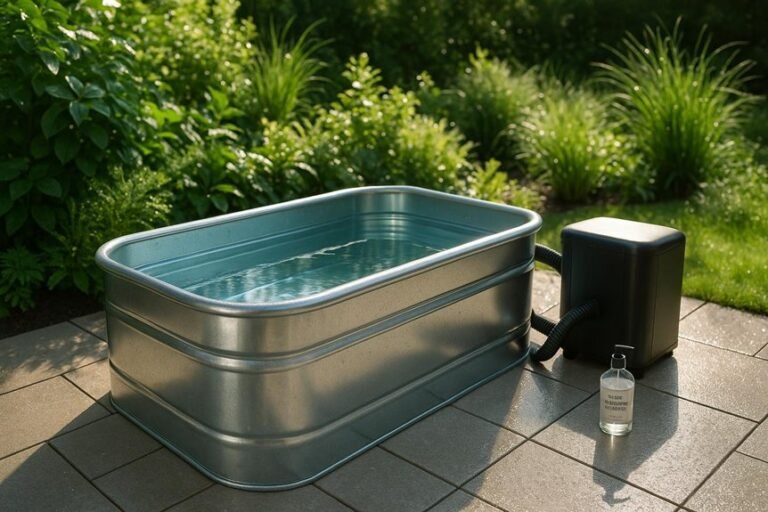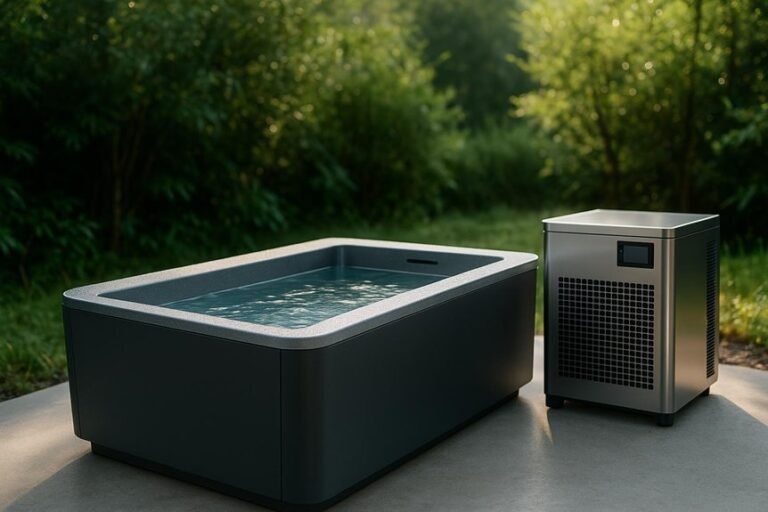
You’ll want the right pump to keep a cold plunge clean, efficient, and reliably chilled, because low temperatures and small volumes change how water moves and how filters perform. This guide walks you through flow rates, head height, plumbing effects, and component resistance so you can size a pump that balances circulation, energy use, and quiet operation; get the basics here, then apply the step‑by‑step examples to match your exact setup.
Key Takeaways
- Calculate required GPM by dividing plunge volume (gallons) by desired turnover time (hours × 60), then add 10–20% reserve.
- Determine total dynamic head by summing vertical lift, plumbing length, fittings, and filter/heat exchanger pressure drops.
- Choose a pump whose performance curve delivers needed GPM at the calculated head, checking cold-water ratings.
- Use larger-diameter, smooth plumbing and minimize fittings to reduce friction losses and improve efficiency.
- Consider separate circulation and high-flow fill/drain pumps, energy-efficient motors, and allowances for colder, more viscous water.
Why Proper Pump Sizing Matters for Cold Plunges
Efficiency matters: choosing the right pump for your cold plunge guarantees the system performs reliably, saves energy, and keeps water clean and at the temperature you expect. You’ll protect equipment and maintain a consistent experience when the pump matches your plunge size and plumbing layout. Undersized pumps struggle against resistance, causing poor circulation, faster wear, and uneven temperatures; oversized pumps waste electricity, increase noise, and can stress filters or fittings. Proper sizing extends component life, reduces operating costs, and supports effective sanitation, so you won’t fight algae or cloudy water. When you pick a pump, consider head pressure, piping diameter, and the materials used, because those factors influence performance and longevity; making a measured choice pays off in reliability.
Understanding Flow Rate: GPM and Turnover Time
You’ll want to understand Gallons Per Minute (GPM) because it tells you how much water the pump moves each minute, and that directly affects circulation. From there, pool turnover time—how long it takes to circulate the entire volume—helps you judge whether a pump’s GPM matches your cold plunge’s size. By comparing your plunge’s volume to the pump’s GPM rating, you can choose a pump that achieves a sensible turnover time for cleanliness and temperature control.
Gallons Per Minute (GPM)
Gallons per minute (GPM) measures how much water your pump moves each minute, and it’s the chief factor that determines how quickly you can circulate and refresh the water in a cold plunge. GPM tells you the flow capacity of different pumps, so you’ll compare models based on that number to match your plunge size and filtration needs. Higher GPM moves water faster, improving mixing and helping your heater or chiller perform evenly, but it also demands more power and may require larger plumbing. You’ll balance desired flow with energy use and noise; selecting a pump with an appropriate GPM guarantees efficient circulation without overworking the system. Check manufacturer curves for real-world GPM at your plumbing resistance.
Pool Turnover Time
When sizing your pump, understand that pool turnover time tells you how long it takes to circulate the entire volume of your cold plunge once, and it’s a practical way to link pump flow rate (GPM) to water freshness and filtration effectiveness. Calculate turnover by dividing total gallons by your pump’s GPM, then convert minutes to hours for a clear goal. You’ll often aim for turnover ranges depending on use and sanitation needs; shorter turnover keeps water cleaner but requires higher flow and energy. Consider how filtration capacity, skimmer placement, and return jet orientation affect effective circulation, since raw GPM doesn’t guarantee even mixing. Track real-world performance, adjust run times, and balance turnover with energy costs to maintain safe, crystal-clear water without oversizing your system.
Matching Pump To Volume
Although matching pump size to your cold plunge’s volume might seem straightforward, getting the flow rate (GPM) right is essential because it directly determines turnover time and the effectiveness of your filtration and sanitation systems. You calculate needed GPM by dividing your plunge volume (gallons) by desired turnover time (minutes), then multiplying by 60 to convert to hours; for instance, a 300-gallon plunge turned over every hour needs 5 GPM. Factor in head loss from fittings, filters, and elevation—your pump’s advertised GPM is at zero head, so expect lower real-world flow. Choose a pump that meets required GPM at estimated system head, or use a variable-speed model to balance energy use and performance while maintaining consistent water quality.
Calculating Required Head Height for Your Setup
Before you choose a pump, you’ll need to determine the required head height for your cold plunge setup so the pump can reliably overcome the vertical and frictional resistance in your plumbing. Start by measuring the vertical distance from the pump’s planned location to the highest point the water must reach; include any elevation to filters or return lines. Add estimated losses from straight runs and fittings as a safety margin, then convert those losses to an equivalent head in feet or meters. Check pump curves from manufacturers to find a model that delivers your desired flow at that total head. Finally, allow a modest reserve—about 10–20%—to accommodate future tweaks and guarantee consistent performance.
How Plumbing Diameter and Fittings Affect Performance
When you size a pump, pipe diameter matters because larger pipes reduce friction and let the pump move more water with less effort, while smaller pipes increase resistance and can cut flow dramatically. Likewise, the types and numbers of fittings—elbows, tees, valves, and unions—add equivalent length and turbulence that raise the total head the pump must overcome, so you’ll want to count them when calculating losses. By considering both pipe diameter and fitting choices together, you’ll get a clearer, more accurate picture of the flow you can expect and avoid undersizing or overworking your pump.
Pipe Diameter Impact
Because pipe diameter controls both flow rate and friction loss, choosing the right plumbing size is one of the most important steps in setting up a cold plunge system. You’ll find larger diameters reduce velocity and cut friction, letting your pump deliver higher flow at lower head pressure, which improves circulation and energy efficiency. Smaller pipes increase resistance, forcing the pump to work harder and potentially reducing turnover, so match diameter to your pump curve and desired GPM. Consider run length and bends too, since longer runs magnify diameter effects. When you calculate, use friction-loss charts or software to compare diameters at target flow, then pick the smallest size that keeps losses within the pump’s efficient operating range to guarantee reliable performance.
Fitting Types Effect
Although pipe diameter sets the baseline for flow, the types and number of fittings you use can make an equally large — and sometimes overlooked — impact on pump performance and system efficiency. When you add elbows, tees, valves, or reducers, each one introduces head loss by creating turbulence and friction; a single 90° elbow can cost as much as several feet of straight pipe in equivalent friction. Smooth-radius fittings and long-radius bends cut that loss, so choose them where space allows. Minimize unnecessary fittings, and plan runs to reduce changes in direction. Remember that valves and restrictive fittings can limit peak flow and increase pump workload, so size pumps with realistic head-loss estimates and test the assembled system to confirm performance.
Accounting for Filter and Heat-Exchanger Resistance
As you size a pump for a cold plunge, don’t forget that filters and heat exchangers add real resistance to flow and will change the head you need; even a modest cartridge filter or compact plate heat exchanger can cut flow rates by 10–30% compared with piping alone. Include their pressure drop when you calculate total dynamic head: add filter and exchanger losses to friction and elevation head. Use manufacturer curves or measured ΔP at expected flow to get accurate numbers. Remember that cleaning or fouling raises resistance over time, so plan a safety margin. If space allows, choose larger filter surfaces or lower-pressure-drop exchanger models to reduce required pump power. Verify final pump selections against system curves to guarantee reliable performance.
Effects of Water Temperature and Viscosity on Pump Selection
When you drop water temperature, its viscosity rises and that change directly affects how your pump moves water, so you’ll need to account for colder, thicker fluid when choosing pump size and impeller type. Colder water increases resistance, reducing flow for a given pump; you should select a motor with enough torque to overcome higher startup and running loads. Choose impellers with profiles that handle viscous fluids — larger diameter or steeper blades can preserve flow at low temperatures. Also check pump curves at expected temperatures, not just room temperature specs, and factor in higher power draw and potential cavitation risks from altered vapor pressures. Finally, allow a margin in sizing to guarantee reliable circulation under the coldest operating conditions.
Choosing Between Circulation Pumps, Fill/Drain Pumps, and Dual Systems
You’ll want to weigh continuous circulation needs against the speed of fill and drain when choosing a pump, since constant turnover keeps temperature and sanitation stable while rapid fill/drain pumps save time during setup and maintenance. In many installations a dedicated circulation pump handles filtering and heat exchange efficiently, whereas a separate fill/drain pump is sized for high flow to empty or refill the plunge quickly. For the best of both worlds, a hybrid dual system combines those strengths—offering steady water care plus fast serviceability—so you can match performance to how you actually use the plunge.
Continuous Circulation Needs
Although continuous circulation isn’t required for every cold plunge setup, it can dramatically improve water quality and temperature stability, so you should weigh the benefits against complexity and cost before choosing a pump strategy. If you want consistent filtration, reduced bacterial hotspots, and more even temperature distribution, continuous pumps deliver steady flow that keeps chemistry and heat exchangers working efficiently. They’ll increase electricity use and require reliable components, so choose energy-efficient models and set sensible flow rates to balance turnover with operating cost. For occasional users, intermittent timed circulation might suffice, while frequent or commercial use often justifies 24/7 systems. Also consider redundancy: a dual setup gives backup and allows maintenance without downtime. Match pump capacity to your plunge volume and filtration system for best results.
Rapid Fill/Drain
If you’ve decided continuous circulation makes sense for water quality and temperature control, you’ll still need to think about how you handle fast fills and complete drains, because those tasks impose different demands on pumps and plumbing. You can use your circulation pump for occasional fills and drains if it’s sized and valved properly, but that may slow filtration life and risk cavitation during high-flow drains. Dedicated fill/drain pumps are built for high flow and brief duty cycles, letting you move water quickly without stressing the circulation system. Choosing dual systems gives you operational flexibility: run the circulator continuously while using a separate, powerful pump for rapid turnaround. Consider plumbing configuration, check valves, and power supply, and match pump head to elevation and hose length.
Hybrid Dual Advantages
When you want both steady water quality and the ability to refill or empty quickly, a hybrid dual approach — pairing a dedicated circulation pump with a separate high‑flow fill/drain pump — gives you the best of both worlds. You’ll use the circulation pump for continuous turnover, filtration, and gentle flow that preserves temperature and improves clarity, while the fill/drain unit handles fast water changes and maintenance, reducing downtime. This separation lets you size each pump effectively: a smaller, energy‑efficient circulator runs long hours, and a larger, intermittent pump provides the necessary gallons‑per‑minute for rapid servicing. Installation adds complexity and cost, but the operational flexibility, reliability during heavy use, and simplified servicing often justify the investment for serious users.
Energy Efficiency, Noise, and Lifetime Considerations
Because energy use, noise, and expected lifespan all affect how a pump performs in real-world settings, you should weigh them together rather than treating each in isolation; a highly efficient pump can lower operating costs but might cost more upfront, while a quieter model may use different motor technology that influences both efficiency and durability. You’ll evaluate motor type (brushless DC vs. induction), efficiency ratings, and duty cycle to predict energy consumption and long-term cost. Noise matters for placement and comfort, so check decibel ratings and vibration isolation options. Consider seals, bearings, and thermal protection when estimating lifetime; these parts determine service intervals and failure modes. Finally, balance warranty coverage and maintenance needs to choose a pump that fits your budget and usage pattern.
Sizing Examples and Step-by-Step Calculation Walkthroughs
Now that you’ve weighed efficiency, noise, and lifespan factors, let’s apply those considerations to real sizing problems so you can see how choices affect performance and cost. Start by calculating required flow: determine pool volume, decide turnover time (e.g., one turnover per hour), and divide volume by turnover to get gallons per minute (GPM). Next, compute total dynamic head: add vertical lift, pipe friction (length, diameter, fittings), and return elevation. Use pump curves to match a pump that delivers your GPM at the calculated head; if multiple pumps fit, compare power draw and L10 life. Include a safety margin of 10–20% for future losses. Finally, document assumptions and recheck with actual measurements after installation.
Troubleshooting Common Pumping Problems
Troubleshooting common pumping problems starts with systematic observation: listen for unusual noises, check flow rates against your design GPM, inspect for leaks or air in the suction line, and note any irregular cycling or overheating, because these symptoms quickly point to causes like cavitation, clogged strainers, worn impellers, or incorrect pump selection. Start by isolating the pump and confirming electrical supply and correct voltage; a weak supply often causes overheating and slow speeds. Clear strainers and clean filters to restore flow, and bleed trapped air from suction lines to stop intermittent operation. If vibration or noise persists, inspect shaft alignment and bearings, and measure discharge pressure against expected head. Replace or resize components when wear or mismatch is confirmed.
FAQ
What Maintenance Schedule Keeps a Cold Plunge Pump Reliable Long-Term?
FAQ 1: How often should I drain and clean my cold plunge pump?
You should drain and clean your cold plunge pump monthly to ensure it operates efficiently and remains hygienic. Regular cleaning helps prevent buildup and extends the lifespan of the system.
FAQ 2: When should I inspect and tighten the fittings on my pump?
Inspecting and tightening the fittings should be done every month. This routine check helps prevent leaks and ensures that all connections remain secure for optimal performance.
FAQ 3: How frequently should I change or clean the filters?
Filters should be changed or cleaned quarterly. This maintenance step is essential for maintaining water clarity and pump efficiency, ensuring that the system functions smoothly.
FAQ 4: What maintenance tasks should be performed biannually and annually?
Biannually, lubricate bearings and check electrical connections to keep the pump running smoothly. Annually, replace any worn parts to ensure long-term reliability and prevent unexpected breakdowns.
Can a Pump Be Retrofitted Into an Existing Plunge Without Rewiring?
FAQ: Can I retrofit a pump into my existing plunge without rewiring?
Yes, you can often retrofit a pump into an existing plunge without rewiring, as long as the new pump matches the existing circuit, plug type, and amperage.
FAQ: What factors should I check before retrofitting a pump?
Before finalizing the retrofit, check for adequate clearance, appropriate fittings, and ensure proper waterproofing to maintain safety and functionality.
FAQ: Are there any compatibility concerns when retrofitting a pump?
Yes, compatibility is crucial. Ensure that the new pump aligns with the specifications of the existing system to avoid issues during installation.
How Do Local Regulations Impact Pump Installation and Discharge?
FAQ 1: What regulations affect where I can discharge water from my pump?
Local regulations often dictate specific areas where water can be discharged to prevent environmental damage. It’s crucial to check local codes to ensure compliance and avoid potential fines.
FAQ 2: Are permits required for pump installation and discharge?
Yes, most local jurisdictions require permits for pump installation and discharge activities. Obtaining the necessary approvals ensures that your installation meets safety and environmental standards.
FAQ 3: What types of controls might I need for my pump installation?
Depending on local regulations, you may be required to implement backflow prevention, filtration systems, or noise reduction measures. These controls help protect water quality and minimize noise pollution.
FAQ 4: Do I need to make alterations to my plumbing for pump installation?
You may need to modify existing plumbing or install containment measures to comply with local regulations. It’s advisable to consult with local authorities to determine the specific requirements for your installation.
Are There Recommended Pump Brands for Saltwater Cold Plunges?
FAQs on Recommended Pump Brands for Saltwater Cold Plunges
1. What are the best pump brands for saltwater cold plunges?
Recommended brands include Hayward, Jandy, Flotec, and Little Giant. These companies offer corrosion-resistant options, including marine and stainless-steel models specifically designed for saltwater use.
2. Do I need additional maintenance for saltwater pumps?
Yes, it’s essential to use sacrificial anodes to protect against corrosion, along with regular inspections and proper sealing to ensure optimal performance and longevity of your pump.
3. Are stainless-steel options necessary for saltwater applications?
Yes, stainless-steel pumps are highly recommended for saltwater environments as they provide added durability and resistance to corrosion compared to standard materials.
What Warranties Typically Cover Pumps Used in Cold Plunge Systems?
What do warranties for pumps in cold plunge systems typically cover?
Warranties generally cover defects in the motor, bearing failures, and electrical components for one to three years. Additionally, seals and impellers may have limited coverage.
Are there specific considerations for warranties regarding corrosion and saltwater?
Yes, it’s important to look for warranties that include specific clauses addressing corrosion and saltwater exposure, as these factors can significantly impact pump performance and longevity.
What should I check regarding labor and replacement terms in pump warranties?
Ensure that the warranty clearly outlines the terms for labor and replacement parts. This can help avoid unexpected costs and clarify what is included in the coverage.
Final Thoughts
Getting pump sizing right keeps your cold plunge reliable, efficient, and safe, so you’ll maintain water quality without wasting energy. Use GPM and turnover targets, calculate total head including fittings and filters, and match the pump’s torque and impeller design to your plumbing and any heat-exchanger. Decide whether a dedicated circulation pump or a dual system fits your needs, and validate with a run-through calculation. Proper sizing reduces noise, wear, and troubleshooting down the line.