Cold plunges can be invigorating, but they also trigger rapid physiological responses that can be dangerous if you’re unprepared. You’ll experience a cold shock with gasping and rapid heart rate, increased blood pressure, and numbness that impairs movement; those with heart disease, high blood pressure, or respiratory issues face higher risk. Learn how to prepare, recognize warning signs, and follow safe practices so your next plunge isn’t your last—keep going to find practical steps.
Key Takeaways
- Cold plunge triggers cold shock: sudden gasping, rapid breathing, and heart-rate spike; control breathing and enter gradually.
- People with heart disease, high blood pressure, or on certain meds should consult a clinician before cold immersion.
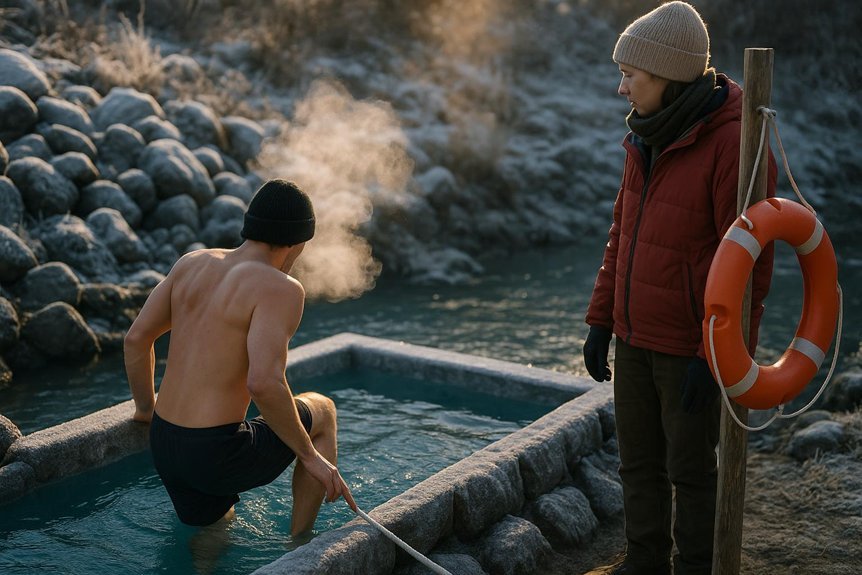
- Never plunge alone: use a sober spotter, have flotation or rescue gear, and rehearse an exit plan.
- Start with short, feet-first exposures, monitor symptoms, and stop immediately for numbness, dizziness, chest pain, or severe shivering.
- Dry off and warm gently afterward; avoid immediate hot showers, rehydrate, and seek medical help for severe hypothermia signs.
What Happens to Your Body During a Cold Plunge
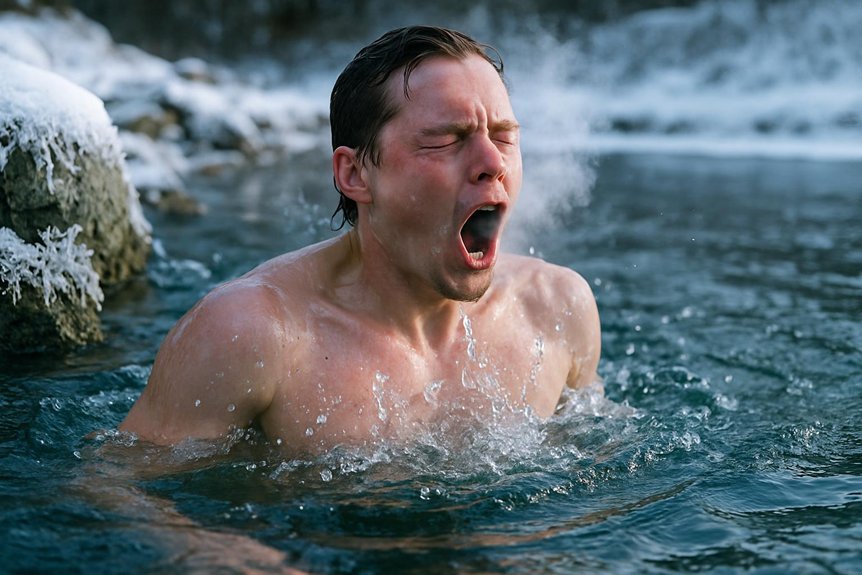
Although the cold shock hits in seconds, your body responds through a sequence of predictable physiological changes that you should understand before trying a plunge. You’ll feel an immediate surge of alertness as sympathetic nerves fire, raising heart rate and redirecting blood to crucial organs. Peripheral vessels constrict to reduce heat loss, which can make your hands and feet numb and increase blood pressure. Breathing rates typically spike, and your muscles tense, boosting metabolic heat production but also limiting fine motor control. Over the next minutes, hormonal responses release adrenaline and noradrenaline, sharpening focus and pain tolerance while raising glucose availability. If exposure continues, core temperature gradually falls, slowing metabolism and impairing coordination; exit and gradual rewarming are essential.
Immediate Risks: Cold Shock and Breath-Holding Reflex
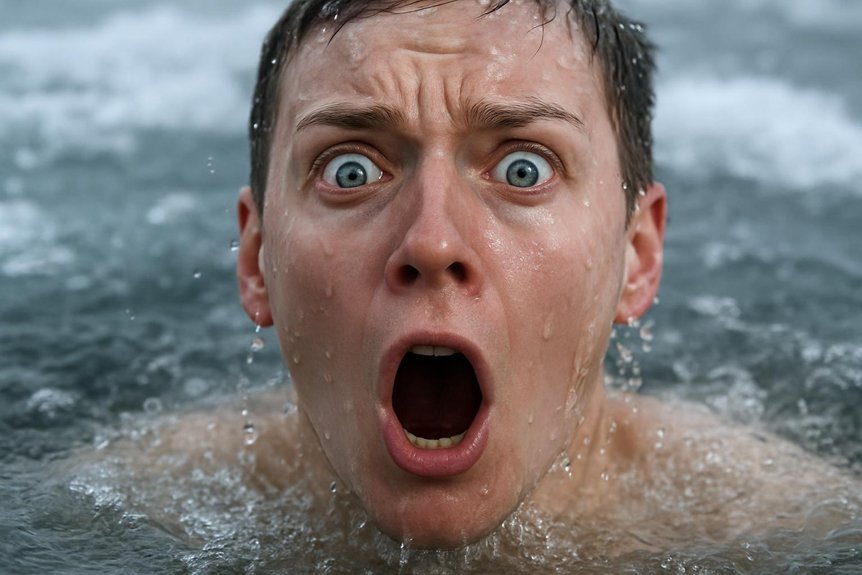
When you plunge into very cold water you can get sudden involuntary gasps that force air into your lungs before you’re ready, which can make swallowing water or losing control of breathing more likely. That initial cold shock often triggers rapid breathing and even panic, raising your heart rate and making it hard to think clearly. Holding your breath to resist the gasp may seem instinctive, but breath‑holding can cause dangerous oxygen drops or blackout, so you should learn safe entry and breathing techniques.
Sudden Involuntary Gasps
Because cold water triggers an immediate, automatic response in your body, sudden involuntary gasps are one of the most common and dangerous reactions during a cold plunge. You’ll feel an abrupt intake of breath, often before you can consciously control it, and that reflex can draw water into your airway if your head isn’t kept above the surface. Stay aware of how quickly your breathing changes and anticipate that first shock; practicing gradual immersion and exhaling as you enter helps reduce the force of the gasp. Always have a spotter nearby and avoid plunging alone, since even experienced people can lose control. If you sense an uncontrollable gasp, lift your chin, focus on slow exhalations, and get out to recover calmly.
Hyperventilation and Panic
If you start to hyperventilate during a cold plunge, your breathing pattern can shift from controlled inhalations to rapid, shallow breaths that reduce carbon dioxide levels and make you feel dizzy, lightheaded, or emotionally flooded; this physiological change can trigger panic, intensify the breath‑holding reflex, and increase the risk of losing motor control or inhaling water. When you feel panic rising, focus on slowing your exhalations and grounding sensations—press your feet, feel the edge of the tub, and keep your chin level to protect your airway. Tell a spotter you need help, exit gradually if possible, and avoid sudden movements that raise your heart rate. Practice controlled breathing on dry land so you can recognize symptoms and respond calmly if they occur.
Breath-Holding Risks
Although the cold shock response is brief, it can provoke an involuntary breath‑holding reflex and sudden gasping that put you at immediate risk in the water. When you reflexively hold your breath or gasp, you raise the chance of inhaling water, losing orientation, or becoming hypoxic; these reactions happen fast and often before you can think clearly. To reduce danger, practice controlled, rhythmic breathing before entering cold water, enter gradually when possible, and never go alone. If you’re supervising others, watch for pale skin, silence, or lack of movement, which may signal breath-holding or unconsciousness. Emergency preparedness matters: know rescue techniques, keep flotation nearby, and call for help immediately if someone shows signs of respiratory distress or altered consciousness.
Cardiac Risk Factors and Who Should Avoid Cold Plunges
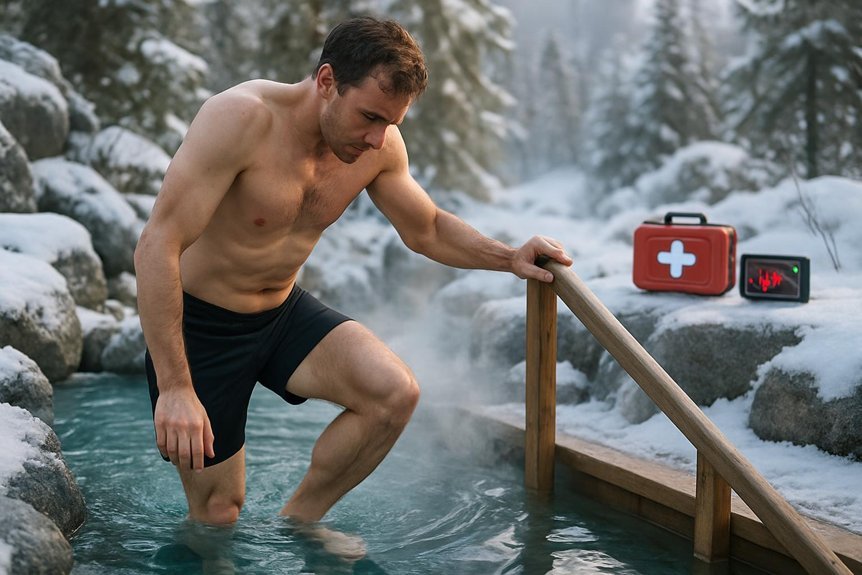
If you have known heart disease, high blood pressure, or a history of arrhythmias, you should be cautious before trying a cold plunge because the sudden cold can spike blood pressure and trigger abnormal heart rhythms. Certain blood pressure medications and beta blockers can change how your body responds to cold, so check with your doctor about interactions and whether supervised testing is needed. If you’ve had fainting, unexplained chest pain, or documented arrhythmias, it’s safer to avoid plunges until a cardiologist clears you.
Preexisting Heart Disease
Because sudden cold exposure triggers a rapid surge in heart rate, blood pressure, and the constriction of blood vessels, people with existing heart disease or cardiac risk factors need to approach cold plunges with caution. If you’ve had a heart attack, angina, heart failure, arrhythmias, or coronary artery disease, your heart may struggle to tolerate that abrupt stress. You should consult your cardiologist before trying cold immersion; they’ll assess risks based on your diagnosis, recent symptoms, and test results. Even if cleared, start very gradually, keep sessions short, and have someone nearby. Watch for chest pain, lightheadedness, palpitations, or excessive shortness of breath, and exit immediately if these occur. When in doubt, prioritize safety over novelty.
Hypertension and Meds
Moving from known heart conditions to common cardiovascular risk factors, high blood pressure and the medications used to control it deserve special attention before you try cold plunges. If you have hypertension, sudden cold exposure can spike your blood pressure further by constricting blood vessels and increasing heart workload. That response may be modest for some, but if you’re on antihypertensives—especially beta blockers or certain vasodilators—you could experience exaggerated blood pressure drops or impaired compensatory responses when you warm back up. Always review your medication effects with a clinician who knows cold-immersion physiology, and avoid solo plunges until you’ve cleared safety limits. If your blood pressure is uncontrolled, or you feel dizzy, chest uncomfortable, or faint during cold exposure, stop and seek medical advice.
Arrhythmia History Risks
Although many people tolerate brief cold immersion without issue, a history of cardiac arrhythmias raises specific safety concerns you should take seriously: sudden cold exposure activates the sympathetic nervous system and can provoke palpitations, premature beats, or dangerous rhythm changes in vulnerable hearts, while the simultaneous vagal surge on cold contact with the face or chest may trigger bradyarrhythmias or pauses. If you’ve had atrial fibrillation, ventricular ectopy, pauses, or been told you have a conduction disorder, discuss cold plunges with your cardiologist first. You should avoid unsupervised or prolonged immersion, particularly alone or in deep cold. Bring a companion, limit exposure time, and consider gradual cold adaptation only after medical clearance and a clear emergency plan.
Hypothermia: Signs, Stages, and When It Becomes Dangerous
When you take a cold plunge, your body’s core temperature can drop quickly, and recognizing the early signs of hypothermia is essential for staying safe; you’ll first notice shivering, numbness in your extremities, and difficulty concentrating, which are your body’s attempts to generate and conserve heat. As exposure continues, shivering may stop, coordination worsens, speech slurs, and you feel unusually drowsy or confused — those are moderate-stage signs requiring immediate warming. Severe hypothermia brings very low responsiveness, weak or absent pulse, slow shallow breathing, and risk of loss of consciousness; at that point, it’s life-threatening and needs emergency medical care. You should monitor time in cold water, dry and insulate quickly if symptoms appear, and seek help early to prevent progression.
Drowning, Slips, and Environmental Hazards
Hypothermia shows how quickly your body can be overwhelmed by cold, but other immediate dangers around a cold plunge are just as important to watch for: drowning, slipping, and hazards in the surrounding environment can turn a short, controlled exposure into a medical emergency. You should never enter water alone; even experienced swimmers can experience cold shock, muscle cramps, or loss of coordination that impairs breathing and movement. Keep footwear and surfaces dry and textured to reduce slips when you approach or exit the plunge, and install handrails or non-slip mats where possible. Scan the area for debris, sharp edges, uneven ground, electrical equipment, or thin ice, and maintain clear lighting so risks are visible. Always have a plan to assist someone quickly if something goes wrong.
How to Prepare Safely Before Your First Plunge
Before you step into cold water for the first time, take time to plan and reduce preventable risks so the experience is safe and effective. Check your health: consult a doctor if you have heart, circulation, respiratory, or seizure conditions, and be honest about medications that affect temperature regulation. Choose a supervised location or bring a sober companion who knows basic first aid and CPR. Dress for conditions—have warm, dry clothes and a hat ready for after the plunge. Learn and rehearse an exit plan so you won’t panic if you feel disoriented. Start with short exposures and gradually increase time only as your body adapts. Have a phone, flotation device, and a timer accessible before you begin.
Safe Practices During and After a Cold Plunge
Although the shock of cold water can be bracing, you should move deliberately and monitor yourself throughout the plunge to reduce risks and get the most benefit; keep your breathing slow and controlled, limit your time based on prior planning, and stay within sight of your companion or supervisor. Enter feet-first, settle into steady breaths, and avoid sudden movements that spike heart rate. Watch for numbness, dizziness, or chatter in your teeth—those signal it’s time to exit. When you finish, dry off and put on warm, dry clothing promptly to prevent prolonged heat loss. Rewarm gently with a warm drink and light activity rather than hot showers immediately, which can stress the cardiovascular system. Log your reaction and adjust future sessions accordingly.
Modifications and Alternatives for Safer Cold Exposure
If you want the benefits of cold exposure but need a gentler, safer approach, there are several modifications and alternatives that can reduce risk while still improving circulation and resilience. You can start with contrast showers—alternate 30–60 seconds of cool water with warm—to stimulate blood flow without shocking your system. Partial immersions, like standing in waist-deep cold water, lower stress on your heart compared with full-body plunges. Shorten duration and raise temperature slightly; even modest cold yields adaptations. Use insulated gloves and socks to protect extremities, and breathe slowly to manage discomfort and avoid hyperventilation. Consider cryotherapy chambers or guided cold-tolerance programs supervised by professionals if you have health concerns. Always consult a clinician before trying new methods.
FAQ
Can Cold Plunges Interfere With Medications Like Beta-Blockers or Antidepressants?
FAQ 1: Can cold plunges affect those taking beta-blockers?
Yes, cold plunges can amplify changes in blood pressure and heart rate, which may interfere with the effects of beta-blockers. It’s essential to consult your healthcare provider before incorporating cold plunges into your routine.
FAQ 2: Should individuals on antidepressants be cautious with cold plunges?
Absolutely. Cold plunges can impact cardiovascular responses, which could interact with certain antidepressants. Always seek guidance from your prescriber to ensure safety.
FAQ 3: Is it safe to assume cold plunges are fine if I’m on medication?
No, you should not assume safety. Each medication can have different interactions with cold exposure, so it’s important to get medical advice tailored to your specific situation.
How Long Should I Wait After Eating to Do a Cold Plunge?
How long should I wait after a large meal before doing a cold plunge?
It’s recommended to wait about 30–90 minutes after a large meal before engaging in a cold plunge. This allows your body to digest properly and minimizes the risk of discomfort.
What about after a small snack?
After a small snack, you should wait around 15–30 minutes before doing a cold plunge. This shorter waiting period helps ensure you feel comfortable while still allowing some digestion to occur.
What should I do if I feel unsure about timing?
If you’re uncertain about the timing, listen to your body. Start gently and pay attention to how you feel; avoiding a full stomach will help prevent discomfort during the cold plunge.
Can Regular Cold Plunges Affect Male or Female Fertility?
FAQ: Can regular cold plunges harm male fertility?
Regular cold plunges are unlikely to harm male fertility if you’re healthy and practice safe plunging. Occasional exposure to cold does not impact sperm production, but extreme or frequent cold stress could pose risks.
FAQ: Do cold plunges affect female fertility?
Cold plunges are generally safe for women with no underlying reproductive issues. Occasional cold exposure is unlikely to disrupt ovulation, but those with fertility concerns should consult a medical professional.
FAQ: How often should I do cold plunges to avoid fertility issues?
Moderation is key; occasional cold plunges are safe, but extreme or frequent exposure may warrant caution. If you have existing reproductive issues, it’s advisable to discuss your cold plunge routine with a healthcare provider.
Is It Safe to Combine Alcohol or Cannabis With a Cold Plunge?
FAQs: Is It Safe to Combine Alcohol or Cannabis With a Cold Plunge?
1. Can I drink alcohol before using a cold plunge?
No, it is not safe to drink alcohol before a cold plunge. Alcohol impairs judgment and increases the risk of accidents and hypothermia during immersion.
2. Is it safe to use cannabis before a cold plunge?
No, using cannabis before a cold plunge is not advisable. It can impair your coordination and decision-making, increasing the risks associated with cold immersion.
3. What are the risks of combining substances with cold plunges?
Combining alcohol or cannabis with cold plunges can lead to dangerous changes in blood pressure and heart function, heightening the risk of serious health issues during immersion.
Can Children or Elderly Relatives Take Brief Cold Plunges Safely?
Can children safely take brief cold plunges?
Generally, children should avoid brief cold plunges unless cleared by a doctor. Close supervision is necessary, and any signs of shivering or confusion should prompt immediate cessation of the activity.
Is it safe for frail elderly relatives to take cold plunges?
Frail elderly individuals should not engage in brief cold plunges without medical approval. It’s important to monitor them closely during the activity and stop immediately if they display any signs of discomfort or distress.
What should I watch for during cold plunges?
While supervising children or elderly relatives during cold plunges, watch for shivering, confusion, or any signs of unwellness. If any of these symptoms arise, stop the cold plunge immediately to ensure their safety.
Final Thoughts
Cold plunges can offer benefits, but you should treat them with caution: get medical advice if you have heart or circulation issues, start slowly, and never go alone. Learn to control your breathing, limit exposure, and watch for numbness, confusion, or excessive shivering—signs of hypothermia. Secure footing and an exit plan reduce drowning or slip risks. After the plunge, rewarm gradually and change into dry clothes; these precautions keep the practice safe and sustainable.